
When homeowners think about their roof, they usually picture shingles or tiles. While those materials are important, one of the hardest-working parts of any roofing system is something many people have never heard of: roof flashing.
Roof flashing protects the most vulnerable areas of your roof by directing water away from joints, corners, and openings. Even if your shingles or tile are in excellent condition, damaged flashing can allow water to seep beneath the roof and into your home’s structure.
Many roof leaks don’t begin because roofing materials have reached the end of their lifespan—they begin because flashing has deteriorated, shifted, or wasn’t installed properly. Understanding how roof flashing works can help you catch problems early and avoid costly repairs.
At Richard Hockett Roofing, we inspect flashing during every roof estimate using drone technology and detailed photo documentation. Instead of simply telling homeowners there’s a problem, we show them exactly what we find so they can make informed decisions about their home.
What Is Roof Flashing?
Roof flashing is a thin metal material—typically galvanized steel, aluminum, or copper—that creates a waterproof barrier anywhere your roof changes direction or has an opening.
Rather than covering the entire roof, flashing is installed in areas where water is naturally more likely to collect or penetrate.
Some of the most common locations include:
- Around chimneys
- Around plumbing vents
- Around skylights
- In roof valleys
- Where a roof meets a wall
- Around dormers
- Along certain roof edges
According to GAF, flashing is one of the most important components of a roofing system because it helps redirect water away from these vulnerable transition points before it can enter the home.
Why Roof Flashing Protects Your Home
Your shingles or roof tiles are designed to shed water down the slope of your roof, but they can’t seal every joint or penetration by themselves.
That’s where roof flashing does the heavy lifting.
Properly installed flashing creates a watertight path that guides rainwater safely around chimneys, vents, skylights, and valleys before it has the opportunity to work underneath the roofing materials.
When flashing begins to fail, water often enters slowly. Homeowners may not notice anything for months until signs begin appearing inside the home, including:
- Ceiling stains
- Water leaks
- Mold or mildew
- Damaged insulation
- Dry rot
- Rotted roof decking
By the time these symptoms appear indoors, the source of the problem has often existed for quite some time.
Why Flashing Problems Are Easy to Miss
Unlike missing shingles or cracked roof tiles, flashing problems are often hidden from view.
Many flashing components sit beneath roofing materials or around areas that simply can’t be seen from the ground. A roof may appear perfectly fine from the driveway while allowing small amounts of water to enter during every storm.
This is one reason professional roof estimates are so valuable.
At Richard Hockett Roofing, we use drone inspections and detailed photographs to examine these hard-to-see areas safely. Homeowners receive clear documentation of what we find, allowing them to see the condition of their roof instead of relying on guesswork.
Common Areas Where Roof Flashing Fails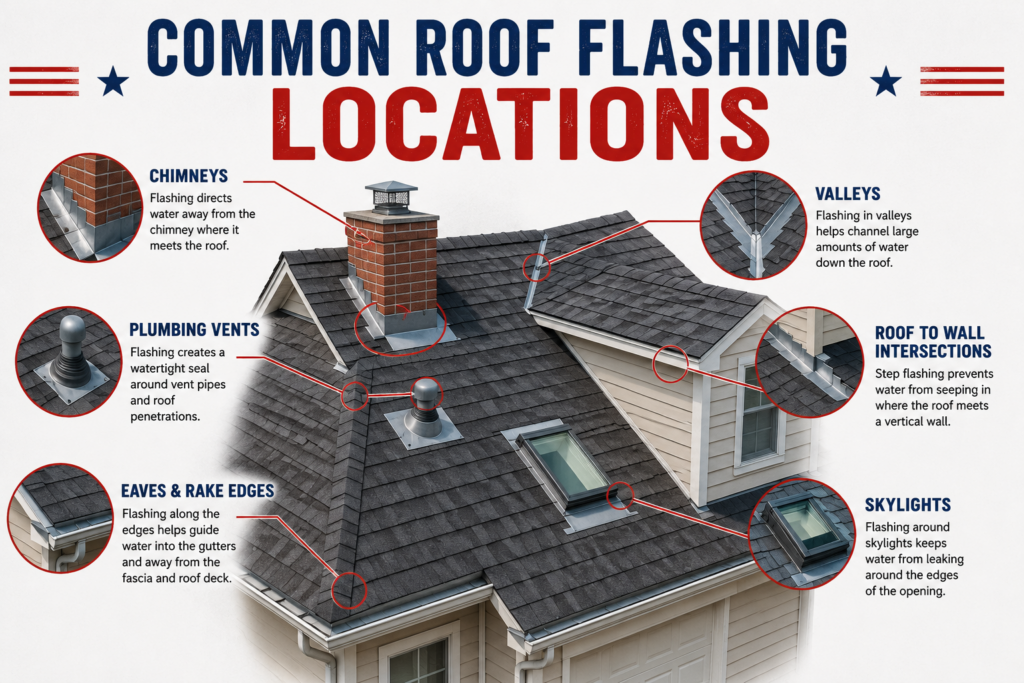
Flashing naturally experiences years of exposure to rain, wind, sun, and changing temperatures. Even a well-built roof can eventually develop flashing issues.
Chimneys
The joint where a chimney meets the roof is one of the most common sources of leaks. Proper chimney flashing consists of multiple interlocking pieces designed to move water away from the chimney. If even one section becomes loose or rusted, moisture can find its way inside.
Roof Valleys
Roof valleys carry more water than almost any other part of the roof. Since every rainstorm funnels water through these areas, damaged flashing can quickly lead to leaks if left unaddressed.
Plumbing Vents
Vent pipes pass directly through the roof, making proper flashing essential. Over time, constant exposure to sunlight and changing temperatures can cause surrounding materials to deteriorate.
Skylights
Skylights add natural light to a home but also create another point where water must be carefully redirected. Improperly installed or aging flashing is one of the most common causes of skylight leaks.
How El Dorado County’s Climate Affects Roof Flashing
Living in the foothills presents unique challenges that many homeowners don’t think about until problems appear.
Throughout El Dorado County, roof flashing is exposed to heavy winter rain, intense summer UV rays, seasonal windstorms, and significant temperature swings. These conditions cause roofing materials to expand and contract year after year, gradually putting stress on flashing connections.
In communities like Placerville, Cameron Park, Shingle Springs, and El Dorado Hills, we also see pine needles and leaves collect behind chimneys and inside roof valleys. When debris traps moisture against flashing, corrosion and premature deterioration can occur.
For homes at higher elevations, occasional snow and freeze-thaw cycles can place additional stress on flashing around roof penetrations.
Because of these local conditions, regular roof inspections are one of the best ways to catch small flashing issues before they become interior leaks or expensive structural repairs.
Can Roof Flashing Be Repaired?
In many situations, yes.
If the flashing itself is still in good condition, a professional roofer may be able to repair or replace individual sections without replacing the entire roofing system.
However, if water has been entering the roof for an extended period, repairs may also involve replacing damaged wood, underlayment, or roof decking.
Every roof is different, which is why a thorough inspection is always the best first step before deciding on the proper repair.
Why DIY Flashing Repairs Usually Don’t Last
When homeowners discover a small leak, it’s tempting to apply roofing cement or sealant as a quick fix.
While that may temporarily slow the leak, it rarely addresses the underlying issue if flashing has shifted, deteriorated, or was installed incorrectly.
Proper flashing repairs often require carefully removing roofing materials, replacing damaged flashing components, and ensuring water can once again flow correctly across the roof.
Attempting to seal over failing flashing without correcting the root problem can allow hidden water damage to continue developing beneath the surface.
How Richard Hockett Roofing Inspects Roof Flashing
Because flashing problems are often hidden, our inspection process focuses on documenting every vulnerable area of the roof.
During every roof estimate, we provide:
- Detailed drone photography
- Close-up photos of flashing and other critical roof components
- Honest recommendations based on the roof’s actual condition
- Organized project tracking and clear communication throughout the process
- Owner involvement and availability to answer questions
Our goal is to educate homeowners—not pressure them. That’s one reason Richard Hockett Roofing has earned the trust of homeowners throughout El Dorado County and continues to receive outstanding 5-star reviews for honest service and quality workmanship.
If you’re looking for experienced local professionals, learn more about our El Dorado Hills roofing services and how we help homeowners protect their investment with thorough inspections and reliable roofing solutions.
Preventing Roof Flashing Problems
While every roof will eventually require maintenance, homeowners can help extend the life of their flashing with a few simple habits.
Some of the best ways to protect your roof include:
- Scheduling regular roof inspections
- Removing debris from valleys and around chimneys
- Trimming branches that contact the roof
- Addressing minor leaks promptly
- Having your roof inspected after severe wind or winter storms
Small repairs caught early are almost always easier and less expensive than repairing water damage that has spread into the home’s structure.
Final Thoughts
Although homeowners rarely notice it, roof flashing is one of the most important parts of any roofing system. It protects the areas most vulnerable to leaks and quietly works year after year to keep water where it belongs—outside your home.
Because flashing problems often develop out of sight, routine roof estimates are one of the best ways to identify potential issues before they become costly repairs. At Richard Hockett Roofing, we’re committed to giving homeowners honest answers through professional inspections, drone technology, detailed photo documentation, organized communication, and the hometown service our customers have come to expect.
If you’re not sure what condition your roof is in, you can book your roof inspection online today and we’ll give you clear answers.