
When you choose a roof color for a foothill home, you are making a decision that will affect the property’s appearance for many years. The roof may be one of the house’s largest visible surfaces, especially on a sloped lot. The right color should complement the exterior, look good in changing light, and meet the roofing system’s practical requirements.
For homeowners in Placerville, Cameron Park, Diamond Springs, Shingle Springs, El Dorado Hills, and Pollock Pines, local surroundings matter too. Summer sun, tall trees, seasonal shade, dust, and pine debris can all influence how a roof looks. Here is a straightforward way to narrow the choices.
Why Roof Color Matters on a Foothill Home
A roof color can change how large, traditional, or modern a home appears. A dark roof creates contrast against light siding, while medium brown or blended gray can help a house settle naturally into a wooded landscape.
Some foothill homes sit below the road, making much of the roof visible from the driveway. In those cases, its color and pattern have an even larger effect on curb appeal. Consider the whole property—including siding, trim, stonework, decks, and vegetation—instead of choosing from a small sample indoors.
How to Choose a Roof Color That Complements Your Exterior
Begin with permanent features. Paint can change, but stone, brick, stucco, and masonry are harder to replace. Your roof color should work with those materials first.
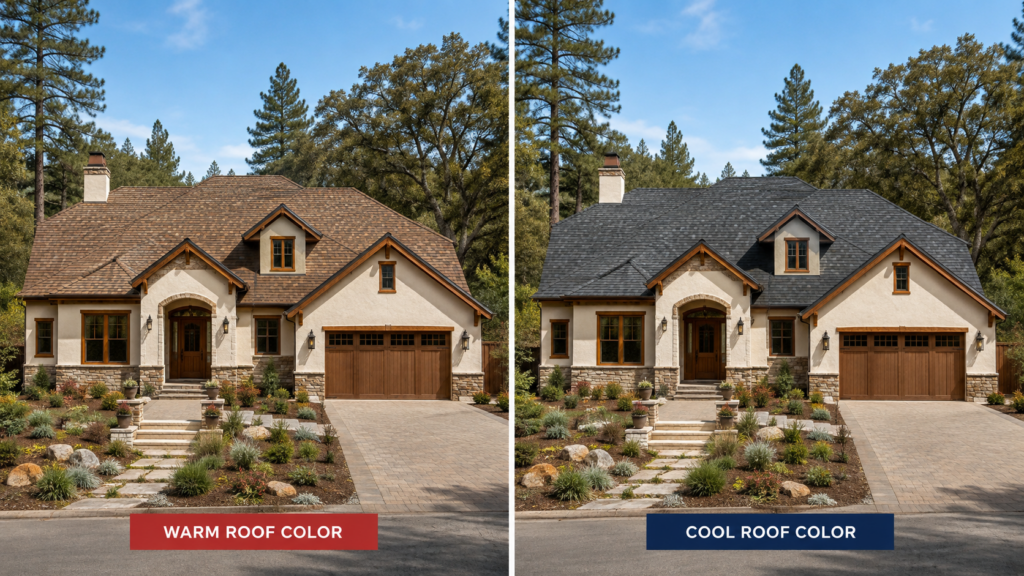
Identify Warm and Cool Undertones
Most exterior colors lean warm or cool. Warm colors include cream, tan, rust, and brown. Cool colors include crisp white, blue, charcoal, and many grays.
A warm exterior often works with brown, weathered-wood, or warm gray roofing. A cool exterior may pair better with charcoal, slate, or cool gray. The colors do not need to match exactly; their undertones simply should not fight each other.
If your house combines materials, a shingle blend that repeats one or two existing colors can tie together the siding, trim, and stone.
Decide Whether to Blend or Create Contrast
Some homeowners want the roof to blend in; others want stronger definition. Both approaches can work.
- A lower-contrast roof usually creates a softer, more unified appearance.
- A higher-contrast roof can define rooflines and make architectural details stand out.
- A very dark roof may feel visually heavy on a small or light-colored home.
- A very light roof can look striking, but it should still coordinate with the home’s style and finishes.
Ask whether you want people to notice the roof itself or the home as a complete picture.
Let Foothill Sunlight and Trees Guide Your Roof Color
Samples can look different outside than under showroom lighting. Afternoon sun may make a color appear lighter and warmer, while shade from pines or oaks can make it look darker or cooler.
This is especially important throughout the Foothills, where one side of a roof may receive strong sun while another stays shaded for much of the day. Elevation, roof orientation, and nearby trees can all affect the finished appearance.
Review Full-Size Samples Outdoors
Small chips help narrow the options, but they do not show the complete pattern. Place a full-size sample board near the roofline and view it safely from the ground in morning light, afternoon sun, and shade.
Also take photos from the driveway or street. A color that looks attractive from five feet away may read differently across the property. Never climb onto the roof to compare samples yourself.
Should You Choose a Light or Dark Roof Color?
Color can influence solar heat absorption, but appearance alone does not reveal how a roofing product will perform. Modern shingles may use reflective granules, so similarly colored products can have different tested ratings.
California’s energy standards include roofing requirements that can depend on climate zone, roof slope, project scope, insulation, and other conditions. For some replacements involving more than half of a roof, solar-reflectance or equivalent requirements may apply. A qualified contractor should confirm what applies before the color is finalized.
Do not pick a roof solely because it looks light or reject a dark color automatically. First confirm that the roofing product and assembly meet applicable requirements. Then choose among the compliant colors.
Use Roof Color Trends as Inspiration, Not a Rule
Current colors can inspire you, but a roof should outlast a short-lived trend. GAF’s regional discussion of trending shingle colors highlights versatile neutrals nationally and lighter reflective options in the West. It also recommends considering architecture, exterior colors, community guidelines, and in-person samples.
Timeless shades such as weathered brown, charcoal, and blended gray coordinate with natural surroundings and several paint colors. Muted green, slate-inspired blends, and other distinctive choices can also work when they support the architecture.
If you expect to repaint soon, decide on the future exterior palette before selecting the roof. If you may sell within several years, a versatile color may appeal to a wider range of buyers.
Check HOA, Fire, and Product Requirements Before Committing
Some communities require approval for exterior changes or limit roofing colors. Ask for current HOA requirements before ordering, even if neighboring homes have a similar roof.
In wildfire-prone areas, roof color and fire performance are different issues. Color does not establish a roof’s fire classification; the material and complete assembly must meet applicable requirements.
Other practical questions include:
- Is the chosen color available in the roofing product specified for the home?
- Does the manufacturer identify normal color variation between production lots?
- Will nearby trees drop pine needles, leaves, pollen, or sap onto visible roof areas?
- Are metal flashing, gutters, and vents being coordinated with the roof color?
- Has the contractor confirmed local permit and energy-code requirements?
Resolving these details early helps prevent delays and surprises.
A Simple Process to Choose a Roof Color With Confidence
You do not need to compare every color. A clear process usually reduces the selection to two or three choices:
- Identify the permanent warm or cool tones on the exterior.
- Decide whether the roof should blend in or provide contrast.
- Remove options that do not meet project, HOA, or code requirements.
- Compare full-size samples outside at several times of day.
- Review how the finalists look from the driveway, street, and other common viewpoints.
A professional roofer should explain the system as well as its appearance. That includes documenting existing conditions, explaining product options, and confirming the selection before installation. Drone images can show the roof shape and surroundings, while organized photos create a clear record of the work.
At Richard Hockett Roofing, we believe homeowners should know what is recommended and why. Clear communication, photo documentation, organized project tracking, and owner availability make the decision more manageable. The goal is to help you choose a roof color that suits your home, location, and roofing system.
If you’re not sure what condition your roof is in, you can book your roof inspection online today and we’ll give you clear answers.