
Northern California homeowners are used to weather changing quickly, but a strong El Niño pattern can make early planning especially important. El Niño roof preparation gives you time to identify small vulnerabilities before repeated rain, wind, and foothill weather put the roofing system under more pressure.
Preparation does not mean assuming that every forecast will become a damaging storm. It means checking the parts of your roof that control water, documenting existing conditions, and correcting practical maintenance concerns while the weather is still manageable.
Why El Niño Roof Preparation Matters in Northern California
El Niño is a climate pattern associated with unusually warm water in the eastern tropical Pacific. It can influence storm tracks and increase the risk of wetter, more intense weather in California, although it cannot predict exactly how much rain a particular neighborhood will receive.
California has already announced statewide preparedness measures for what officials describe as a potentially historic El Nino year. The state specifically advises residents to prepare for possible heavy rain, strong winds, mountain snow, flooding, landslides, and debris flows while recognizing that El Niño does not guarantee a specific storm or a wet winter everywhere.
That distinction matters. Homeowners do not need to panic, but they should use the advance notice to inspect drainage, address known leaks, and make a clear plan.
Begin With a Roof Inspection Before the Storms
A professional roof inspection provides a starting point for Northern California storm prep. The goal is to evaluate visible conditions before wet weather makes access more difficult and active leaks more urgent.
A useful inspection may include ground observations, close-up photographs, attic access when appropriate, and drone images of steep or difficult-to-view sections. Attention should be given to:
- Missing, cracked, slipped, or lifted roofing materials
- Valleys and other areas where water concentrates
- Flashing around chimneys, walls, skylights, and vents
- Gutters, downspouts, and roof edges
- Previous patches or signs of recurring leaks
- Visible deterioration at fascia, eaves, or decking
Photos are valuable because they create a record of what was visible before the season. They also make it easier for the homeowner and contractor to discuss the same conditions without relying only on a verbal explanation.
Make Drainage a Priority During El Niño Roof Preparation
Even a roof in good condition can struggle when water cannot move away efficiently. Gutters, valleys, and downspouts work together to carry rain off the roof and away from the building.
Pine needles, leaves, seed pods, and branches are common around foothill homes. Debris can collect in valleys or cover gutter outlets, allowing water to slow down or back up near vulnerable roof edges. Gutters may also pull away from the fascia if they are overloaded.
Homeowners can safely observe downspouts and visible gutters from the ground. Look for overflowing water, disconnected sections, stains on fascia, or drainage that empties next to the foundation. Avoid climbing onto a wet or steep roof. Professional cleaning or evaluation is the safer choice when access is required.
Check Flashing and Roof Penetrations
Flashing is the metal or waterproof material used where roofing meets another surface. It helps direct water away from joints that shingles or tiles cannot protect by themselves.
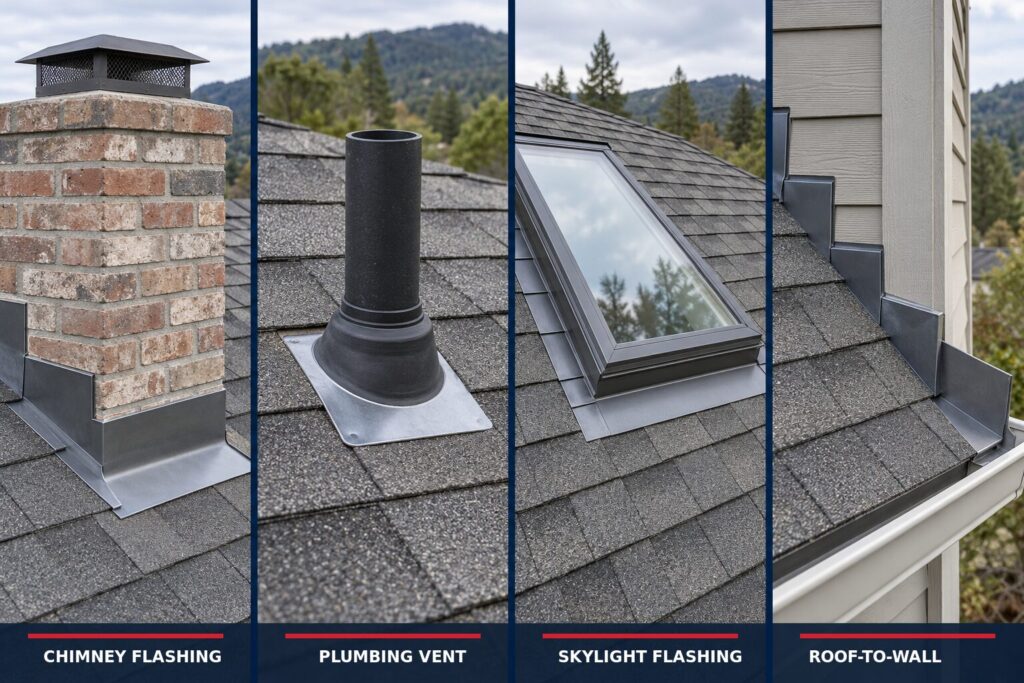
During Northern California storm prep, flashing deserves attention around chimneys, skylights, plumbing vents, roof-to-wall transitions, and solar attachments. Sealants can age, metal can loosen, and previous repairs may fail after extended exposure to sun and rain.
A roof penetration is any item that passes through the roofing system. These areas are not automatically problems, but they rely on correct installation and maintenance. A careful inspection should identify visible gaps, deterioration, movement, or staining that may justify repair before a long stretch of wet weather.
Take Previous Leaks Seriously
A ceiling stain that dried months ago is still useful information. Water may enter at one location, travel along decking or framing, and appear somewhere else inside the home. That is why the stain is not always directly below the source.
Before the season changes, note any history of:
- Ceiling or wall discoloration
- Damp attic insulation
- Musty odors after rain
- Peeling paint near exterior walls
- Dripping around skylights, vents, or fireplaces
- Repairs repeated in the same area
Share that history during the inspection. It helps narrow the investigation and prevents a roofer from evaluating the exterior without knowing what has happened inside.
Repair Damaged Roofing Materials Before Repeated Rain
Different materials show storm vulnerabilities in different ways. Composition shingles may lift, crack, lose granules, or become brittle. Tile can crack or slip, exposing the underlayment beneath it. Metal panels may have loose fasteners, damaged seams, or flashing concerns.
A single damaged piece does not automatically mean the whole roof needs replacement. The condition of the surrounding area, roof age, installation history, underlayment, and evidence of moisture all matter.
Good El Niño roof preparation separates focused maintenance from larger concerns. A trustworthy recommendation should explain what needs attention now, what can be monitored, and what may require longer-term planning.
Look Beyond the Roof Surface
Storm preparation also includes the property around the roof. Overhanging branches can scrape roofing materials or drop heavy debris during wind. Dead limbs may present a larger risk and should be evaluated by a qualified tree professional rather than a roofer.
Check that patio covers, exterior decorations, and loose yard items are secured. Make sure downspouts discharge where water can move away from the home. Properties near slopes, drainage channels, or recently burned areas may also need broader flood or debris-flow planning beyond the roofing system.
In higher-elevation communities such as Pollock Pines, preparation may also include snow and ice concerns. The right priorities depend on the home’s location, roof design, surrounding trees, and elevation.
Document Your El Niño Roof Preparation and Storm Plan
If repairs are recommended, ask for a written scope describing the location, materials, and work included. Before-and-after photographs create a clear record and may be helpful if questions arise later.
Keep the contractor’s contact information, inspection photos, warranties, and repair documents together. Inside the home, know where you could safely place a container if a leak develops, and move valuable items away from areas with a previous moisture history.
During severe weather, do not climb onto the roof or attempt a temporary repair in wind or rain. Photograph interior damage from a safe location, limit additional water damage when possible, and contact a qualified professional after immediate safety concerns are addressed.
Northern California Storm Prep Creates Clearer Choices
El Niño roof preparation cannot control the weather or guarantee that a roof will never leak. It can reduce avoidable uncertainty by identifying visible wear, improving drainage, documenting current conditions, and addressing repair needs before contractors are responding to widespread storm damage.
For homeowners in Folsom, Placerville, El Dorado Hills, Cameron Park, Diamond Springs, Shingle Springs, Pollock Pines, and surrounding communities, the best plan is specific to the property. A careful inspection and straightforward explanation provide better guidance than a generic storm checklist.
If you’re not sure what condition your roof is in, you can book your roof inspection online today and we’ll give you clear answers.