
Installing solar panels is a long-term investment, so it makes sense to think about the roof beneath them before installation begins. If the roofing system is already worn or approaching the end of its useful life, adding panels first may create extra work later. A Folsom solar roofing inspection can help you decide whether the roof is ready for solar or should be repaired or replaced beforehand.
The answer is not based on age alone. Material, installation quality, past repairs, drainage, and visible wear all matter. The goal is to compare the roof’s likely remaining life with the solar plan, then schedule the projects in the right order.
Why Folsom Solar Roofing Requires Advance Planning
Solar panels cover a substantial portion of many roofs. Once installed, they limit direct access to the roofing materials below them. If a leak develops or the roof needs replacement, qualified solar professionals may need to remove the panels and mounting components before roofing work can begin.
After the roof work is complete, the solar system must be reinstalled and checked. Palmetto’s guide to installing a new roof with solar explains that removal and reinstallation add time and cost when a roof must be replaced after panels are already present.
Planning roof replacement before solar installation can help you avoid disturbing a newer solar system several years later. However, a sound roof with plenty of useful life remaining may not need replacement simply because you want panels.
Begin With a Thorough Roof Inspection
The first step is an inspection of the entire roofing system, including areas where panels may be installed. A quick view from the driveway cannot provide enough information for this decision.
Depending on the home, an inspection may evaluate:
- Shingle, tile, or metal-roof condition
- Flashing around walls, vents, chimneys, and skylights
- Valleys, gutters, and other drainage areas
- Previous repairs or signs of recurring leaks
- Roof penetrations and planned mounting locations
- Visible sagging or possible decking concerns
- Attic conditions when access is appropriate
Drone and close-up photographs help the homeowner, roofer, and solar company discuss the same visible conditions instead of relying on a general description.
Compare Roof Life Before Planning Solar
No inspection can guarantee exactly how many years a roof will last. Still, its age, material, condition, and repair history can provide helpful context.
An older roof is not automatically failing. Likewise, a newer roof may have installation problems or damage. Folsom’s summer sun contributes to material aging, while seasonal rain tests flashing, valleys, and penetrations.
If the roof is likely to need replacement well before the solar equipment, completing the roof replacement before solar may be the more practical long-term choice. If the roof is in good condition with substantial life remaining, focused maintenance or minor repairs may be enough.
How Roofing Material Affects Folsom Solar Roofing
The type of roof affects how solar installation should be planned.
Composition Shingles
Composition shingles are common on Folsom homes. Inspectors should look for cracking, granule loss, lifted edges, and previous patches. Underlayment and decking may not be completely visible from the surface.
Concrete or Clay Tile
Tile can remain serviceable while the underlayment beneath it ages. Installation activity can also break tiles. The roofing and solar teams should agree on access, mounting methods, and responsibility for damage.
Metal Roofing
Metal-roof attachment methods depend on the panel profile and design. Seams, fasteners, coatings, and existing penetrations should be evaluated before the solar layout is finalized.
Look Beyond the Visible Roofing Material
Solar mounting hardware transfers loads to the roof structure. That makes the condition of the decking—the wood surface beneath the roofing—an important part of the conversation.
Decking remains mostly concealed until roofing materials are removed. Deflection, attic staining, deteriorated eaves, or a history of leaks may suggest trouble, but an inspection cannot confirm every hidden condition.
If roof replacement is recommended, ask how hidden decking damage will be documented, priced, and approved after tear-off. Clear photographs and a written change-order process prevent confusion if concealed damage is discovered.
Coordinate Flashing and Roof Penetrations
Solar installation usually involves attachments to the roof. Each attachment must be installed using a method appropriate for the roofing material and system. Poorly planned penetrations can create vulnerable areas, particularly when water control relies only on sealant.
Ask the solar contractor to explain its mounting and flashing method. The roofer should know the proposed panel locations and conduit routes. Skylights, vents, valleys, and drainage paths must remain functional.
A coordinated Folsom solar roofing plan should also preserve reasonable access for future maintenance. Packing panels too close to roof transitions or service areas may make later inspections and repairs more difficult.
Understand Who Is Responsible for Each Part
Roofing and solar contractors have different responsibilities and warranties. Homeowners should know who handles each part rather than assuming the companies will resolve every detail themselves.
Before signing, ask:
- Who confirms that the roof is ready for solar?
- Who designs and approves the panel layout?
- Who installs and warrants roof attachments and flashing?
- Who handles permits and required inspections?
- Who removes and reinstalls panels if roof work becomes necessary?
- Could roofing or solar work affect either warranty?
- Who should be contacted if a leak appears near the array?
Get the answers in writing. If separate companies are involved, provide each contractor with the other company’s scope and contact information.
Document the Roof Before Panels Are Installed
Good documentation creates a clear record of the roof before the solar project changes access and visibility. Request overview photographs of every slope along with close-ups of repairs, flashing, vents, valleys, and planned panel areas.
Keep roofing invoices, warranties, inspection findings, and solar plans together. These records can help identify what existed before installation if a concern appears later.
Homeowners planning improvements in Folsom can benefit from a roof evaluation before finalizing the solar schedule. Our inspection process emphasizes detailed photographs, straightforward explanations, and organized communication so you can make the decision with clearer information.
When Roof Replacement Before Solar Makes Sense
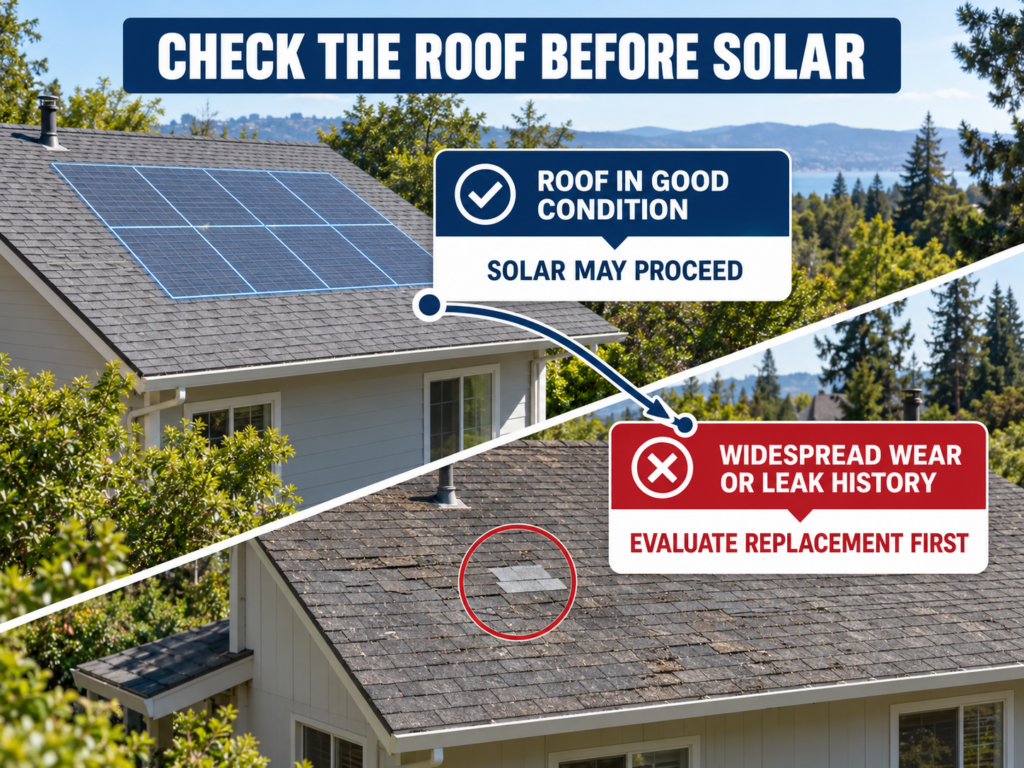
Replacement may deserve serious consideration when the roof has widespread wear, recurring leaks, failing underlayment, extensive previous repairs, or insufficient remaining life for the homeowner’s solar plan. It may also make sense when a roof already needs major work in the sections where panels will be placed.
Replacement may not be necessary when the roofing system is relatively new, performs well, and has no significant visible concerns. In that situation, complete any recommended maintenance first and make sure the solar installation method is compatible with the roof and its warranties.
Avoid making the decision from a single factor. A professional inspection, documented roof history, and clear conversations with both contractors provide a stronger basis than roof age alone.
Build a Better Folsom Solar Roofing Plan
The best time to address the roof is before solar panels make it harder to reach. A Folsom solar roofing evaluation can clarify whether your home needs replacement, targeted repairs, routine maintenance, or no roofing work before the solar project proceeds.
When both projects are planned together, homeowners can reduce avoidable removal and reinstallation, protect drainage and flashing details, and create better documentation for future service. The right answer is not always a new roof. It is an informed plan that gives the roofing system and solar equipment a practical chance to work together for years.
If you’re not sure what condition your roof is in, you can book your roof inspection online today and we’ll give you clear answers.