
Landscaping roof damage is easy to miss because the first warning sign may appear in the yard. A branch touching the shingles, a sprinkler reaching the fascia, or a gutter filled with pine needles may not seem urgent. Over time, repeated contact, trapped moisture, and restricted drainage can create problems.
That connection is especially important in El Dorado Hills, where mature oaks, ornamental trees, dry summers, wind, and seasonal rain all influence how a property performs. The goal is not to remove every tree near the house. It is to help the landscape and roofing system work together.
Landscaping Roof Damage Often Starts Overhead
Trees provide shade, privacy, and character, but their location matters. Limbs that hang directly above a roof can drop leaves, needles, seed pods, and small twigs into valleys and gutters. During windy weather, larger material may fall with enough force to crack tile, dent metal, loosen shingles, or damage a gutter.
Even a branch that never breaks can cause trouble if it rubs against the roof. Repeated movement may scrape protective granules from composition shingles, disturb ridge materials, or wear against tile surfaces.
A qualified arborist can evaluate tree health and recommend safe pruning. Homeowners should never work near power lines or climb onto a steep roof to cut branches.
Tree-Related Roof Damage Is Not Always Dramatic
The most common tree-related roof damage may be gradual rather than sudden. Small amounts of debris collect in a valley, hold moisture, and catch more material each time the wind blows. The pile grows until water no longer follows its intended path as freely.
Debris can also settle behind chimneys, skylights, roof-to-wall transitions, and other places where the roof changes direction. These areas already depend on careful flashing and drainage details. Keeping them clear makes it easier for the system to move rainwater away.
A helpful discussion of landscaping-related hidden problems shows why it is worth looking beyond obvious storm damage.
Leaves and Needles Can Block Roof Drainage
Gutters are designed to collect roof runoff and direct it toward downspouts. When leaves, pine needles, and roof grit restrict that path, water can spill over the front or back of the gutter. It may stain fascia, saturate nearby soil, or concentrate water where it was not intended to go.
Roof valleys deserve the same attention. A valley carries runoff from two adjoining roof planes, so it may handle a large amount of water during a storm. Debris that remains in the valley can slow drainage and keep the surface damp after the rest of the roof has dried.
Gutter guards may reduce large debris, but they do not make the system maintenance-free. Fine needles, grit, and seeds can still collect, so guards and gutters should both be checked.
Irrigation Overspray Repeatedly Wets the Same Areas
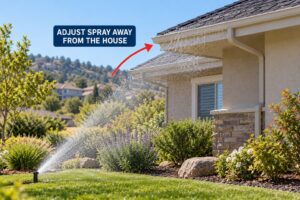
Sprinklers should water plants, not the house. A misdirected head can repeatedly spray eaves, fascia, siding, gutters, or the edge of a low roof. That does not automatically mean damage is occurring, but unnecessary wetting can leave mineral deposits and keep exterior materials damp longer than intended.
This is easy to overlook during a dry El Dorado Hills summer because irrigation may run early in the morning or after dark. Watch a complete watering cycle occasionally. Adjust heads that mist the structure, and check whether new plant growth has changed the spray pattern.
Drip irrigation can also leak. If soil near the house remains saturated, a landscaper or drainage professional may need to find the source and correct it.
Shade Can Keep Roof Sections Damp Longer
Shade itself does not mean a roof is failing. The concern is that deeply shaded areas may dry more slowly, especially when leaves or soil-like organic debris remain on the surface. Moss is more likely to establish in damp, partly shaded locations, while algae or staining may appear where moisture persists.
Do not pressure-wash roofing materials or aggressively scrape growth away. Those methods can damage shingles or tiles and may create a fall hazard. A roofer can identify the roofing material, determine whether the condition is cosmetic or more serious, and recommend an appropriate response.
Strategic pruning may improve airflow and sunlight without sacrificing the entire tree canopy. An arborist can help balance roof clearance, tree health, shade, and the appearance of the landscape.
Landscaping Roof Damage Can Begin at Ground Level
Roof runoff does not stop being a roofing concern when it reaches the downspout. Water still needs a suitable place to go. A downspout that empties into dense planting, eroded soil, or a blocked drain may cause water to collect near the house or wash away landscaping.
Changes to patios, retaining walls, planter beds, or grading can redirect runoff. Before adding hardscape or altering the slope around the home, consider how roof water currently moves across the property.
Vines deserve special attention. Climbing plants can work behind gutters, trim, and roof edges, making inspection difficult and trapping debris. Keep vigorous vines away from roofing components rather than allowing them to use the house as a trellis.
Wildfire Preparation Connects the Yard and Roof
In a foothill community, landscaping decisions are also part of wildfire preparation. California guidance recommends removing dead leaves, pine needles, and other debris from roofs and gutters. It also advises maintaining clearance between tree branches and chimneys. These steps reduce combustible material at vulnerable roof edges and around potential ember-entry areas. CAL FIRE
Tree species, slope, plant condition, and local requirements can affect defensible-space decisions. Consult current fire-authority guidance and use qualified professionals for large trees.
A clean gutter cannot correct damaged flashing, and a sound roof does not eliminate the need to manage nearby vegetation.
How to Reduce Tree-Related Roof Damage Safely
A few regular observations can reveal changes before they become larger concerns. From the ground, look for:
- Branches touching or hanging low over the roof
- Leaves or needles collecting in valleys and gutters
- Water spilling from gutters during rain
- Sprinklers reaching the roof edge, fascia, or siding
- Vines growing behind gutters or exterior trim
- Shaded areas that stay damp or show visible growth
Avoid walking on tile, wet roofing, or steep slopes. Binoculars, safe ground-level photographs, and professional drone images can provide useful information without placing a homeowner on the roof.
A Roof Inspection Can Connect the Clues
Landscaping roof damage can resemble ordinary wear when it is viewed from only one angle. A good inspection considers the roof covering, valleys, flashing, penetrations, gutters, fascia, nearby branches, and drainage path together. It should also explain which conditions are active concerns and which simply need monitoring.
Wide drone views can show how trees relate to different roof planes, while close-up photographs document debris, wear, or drainage restrictions. Organized records make changes easier to track.
Homeowners can learn more about our El Dorado Hills service areas and local roofing options. Our approach emphasizes careful inspection, clear photographs, straightforward explanations, organized communication, and owner availability when additional experience is helpful.
Preventing Landscaping Roof Damage Starts With Awareness
Your roof and yard do not operate as separate systems. Branches affect the roof surface, debris affects drainage, irrigation affects moisture exposure, and downspouts influence where water moves at ground level. Recognizing those connections can help prevent landscaping roof damage without giving up the trees and plants that make a property feel established.
For El Dorado Hills homeowners, the best approach is usually a coordinated one: keep vegetation maintained, let roof and gutter components drain freely, correct overspray, and have questionable areas evaluated by the appropriate professional.
If you’re not sure what condition your roof is in, you can book your roof inspection online today and we’ll give you clear answers.