
Matching roof shingles sounds simple: identify the existing color, purchase a replacement bundle, and install the new shingles. In practice, even the correct brand and color may look noticeably different once placed beside roofing that has spent years exposed to the El Dorado County sun.
A visible difference does not necessarily mean the wrong product was installed. Shingles change as they weather, and manufacturers occasionally update colors, materials, and product lines. Understanding these variables can help homeowners set realistic expectations before approving a roof repair.
Why Matching Roof Shingles Is Not Always Exact
Asphalt shingles are produced with colored mineral granules embedded in their surfaces. Those granules create the roof’s color while helping protect the asphalt beneath them.
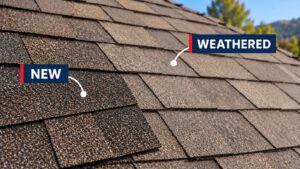
When new, the shingles across a roof generally have a consistent blend. Over time, sunlight, heat, rain, tree cover, debris, and normal aging change their appearance. A fresh shingle comes directly from its packaging, while the surrounding roof may have experienced ten or fifteen years of weather.
The result is similar to patching an older painted wall. You can use the original color name, but the new section may still look fresher than the surface around it.
Sun Exposure Changes Shingle Color
Strong sunlight is one of the biggest reasons old and new shingles look different. Roof sections that receive direct afternoon sun may fade faster than sections protected by trees or the home’s design.
CertainTeed explains that prolonged sun exposure can contribute to fading, granule loss, asphalt deterioration, brittleness, and cracking. certainteed.com
That matters throughout El Dorado County, where roofs can experience intense summer heat and ultraviolet exposure. A west-facing slope in Cameron Park may weather differently from a north-facing slope shaded by mature oaks. Both sections belong to the same roof, but they may no longer display the same color.
Shade can create its own differences. Shaded areas may retain moisture longer or collect moss and organic debris. Therefore, one roof can develop several slightly different tones even though every shingle originally came from the same product line.
Manufacturing Changes Complicate Shingle Color Matching
Manufacturers sometimes adjust a shingle’s construction, granule blend, pattern, or product specifications. A color name may remain available while its current appearance differs slightly from an older version.
Production runs can also have modest color variation. Manufacturers blend granules carefully, but roofing materials are not printed like a sheet of solid-colored paper. Natural variation is part of the dimensional appearance of many architectural shingles.
For that reason, shingle color matching involves more than finding a wrapper with the same color name. The roofer may also need to consider:
- The manufacturer and exact product line
- The approximate installation date
- The shingle’s style and dimensions
- The original color blend
- Whether the current version has changed
- Any identifying information from leftover bundles
If the homeowner has extra shingles stored in a dry, protected location, those pieces may be useful. However, even original leftovers have not weathered on the roof. They could still appear darker or richer than the installed shingles.
Discontinued Shingles May Have No Direct Replacement
Roofing manufacturers regularly update their product collections. Some colors are renamed, redesigned, or discontinued. Entire product lines can also leave the market.
When that happens, there may not be a true replacement available. A similar shingle from another collection might match the general color family but differ in thickness, shadow lines, tab pattern, or granule blend.
Using a visually similar product is not always appropriate. The replacement must also be compatible with the roof’s construction and the surrounding shingles. Appearance matters, but water-shedding performance and correct installation matter more.
A professional evaluation can determine whether an available product is suitable or whether a different repair strategy should be considered.
Roof Orientation Can Make a Match Look Different
Before selecting a repair shingle, it helps to study the entire roof rather than comparing one loose sample from the driveway.
A sample may look close in your hand but appear different once installed on a sloped surface. Sun angle, nearby trees, shadows, and the direction from which the roof is normally viewed can all influence the result.
A roof inspection may reveal that the same existing shingle already looks different from one slope to another. In that situation, the closest match may come from evaluating the repair area under similar light rather than trying to match a shaded sample to a sun-exposed slope.
Drone photographs can be especially helpful on large or steep roofs. They provide an organized view of the roof’s color patterns, repair location, and surrounding materials without requiring the homeowner to climb onto the roof.
Previous Installation History Matters
Not every roof was installed at the same time. An addition, garage, porch, or repaired slope may have been roofed years after the main structure.
Previous owners may also have completed repairs with shingles from a different brand or color blend. From the ground, those differences may be subtle until another repair brings attention to them.
Before matching roof shingles, useful questions include:
- Was the entire roof installed during one project?
- Has the home been expanded or remodeled?
- Are invoices, permits, or warranty records available?
- Are extra shingles or product wrappers stored on the property?
- Have previous repairs already introduced another shingle type?
Detailed photographs help document these differences before work begins. They also give the homeowner and contractor a clear reference when discussing what is realistically achievable.
When a Blended Roof Repair May Work
Sometimes a repair can be blended across a wider area instead of creating one sharply defined patch. The goal is to distribute slight color differences so the transition appears more natural.
Whether blending is appropriate depends on the repair location, roof condition, available materials, and how the shingles need to interlock. A roofer should not remove unnecessary roofing solely to chase a cosmetic match.
A blended repair may be possible when:
- A compatible shingle with a similar color range is available
- The surrounding shingles remain flexible enough to work with safely
- The repair area allows new pieces to be staggered naturally
- The roof is not too brittle or deteriorated for localized work
Blending can reduce contrast, but it cannot guarantee an invisible repair. New shingles may weather closer to the existing roof over time, although no one can promise that the colors will eventually become identical.
When Matching Roof Shingles Is Less Important Than Condition
Color matters to homeowners, particularly when the repair area is visible from the street. Still, appearance should not overshadow the roof’s ability to shed water.
If the existing shingles are brittle, extensively cracked, heavily worn, or losing large amounts of granules, disturbing them may create additional damage. A small repair can also become difficult when nearby shingles no longer seal, lift, or flex as intended.
In those cases, the contractor should explain the limitations before work begins. The best option may be a visible but functional repair, a larger sectional repair, or planning for replacement. The answer depends on the actual roof—not just its age.
Homeowners can learn more about our roof repairs and the other roofing services available throughout the area. A careful inspection helps determine whether a localized repair is practical and what cosmetic differences should be expected.
Documentation Makes Future Matching Easier
After a roof installation, keep the contract, final material selection, warranty information, and photographs together. If possible, retain the manufacturer, product line, color name, and production information from the packaging.
A few properly stored leftover shingles may also help with future repairs. They should be kept flat in a dry location where they will not bend, absorb moisture, or experience unnecessary heat.
At Richard Hockett Roofing, organized photo documentation helps homeowners see the repair area, the surrounding roof, and the completed work. Clear communication is especially important when a perfect color match is not available. Homeowners deserve to understand that limitation before the repair begins—not after they notice the difference from the driveway.
Set Realistic Expectations for Shingle Color Matching
Matching roof shingles is part product research, part inspection, and part managing the realities of an aging exterior material. The original shingle may be discontinued, its color may have changed, or different roof sections may have weathered at different rates.
A good repair should use a compatible roofing material, protect the home, and be installed correctly. When a close visual match or blended repair is possible, that is a welcome benefit. When it is not, straightforward documentation and an honest explanation allow the homeowner to make an informed decision.
If you’re not sure what condition your roof is in, you can book your roof inspection online today and we’ll give you clear answers.