
Most homeowners recognize shingles, gutters, and flashing, but the most important part of a roof may be the layer they rarely see. Roof decking supports the materials above it and helps create a strong, stable roof system. When roof decking damage develops, it can weaken that foundation and allow a relatively small moisture problem to become a much larger repair.
Because decking is covered by other roofing materials, damage is not always obvious. Understanding the warning signs can help you make informed decisions about your home.
What Is Roof Decking?
Roof decking, also called roof sheathing, is the solid surface attached to the rafters or trusses of a home. Underlayment, shingles, tile, metal panels, and other roofing components are installed above it. In most residential homes, the decking is made from plywood, oriented strand board, or older wood planks.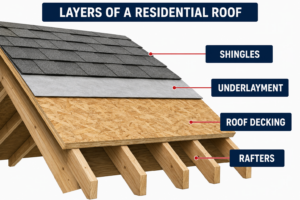
You can think of decking as the foundation of the roof system. It provides a secure surface for roofing fasteners and helps distribute weight across the structure. Roof decking and roof sheathing are two terms for the same component, according to GAF, and common materials include plywood, oriented strand board, wood planks, tongue-and-groove boards, and metal.
Portions of the decking may be visible from an unfinished attic, but damage can still be difficult to confirm until roofing materials are removed.
What Causes Roof Decking Damage?
Roof decking does not usually deteriorate without a reason. Moisture is the most common cause. When water gets past shingles, flashing, underlayment, or seals around roof penetrations, it can soak into wood decking. Repeated exposure may eventually cause staining, swelling, soft spots, mold, or rot.
In El Dorado County, winter rain and wind can expose weak areas. Pine needles may hold moisture or interfere with drainage. Poor attic ventilation can also contribute to condensation and long-term deterioration.
Common causes include:
- Leaks around chimneys, skylights, vents, and roof valleys
- Missing, cracked, lifted, or badly worn roofing materials
- Damaged or incorrectly installed flashing
- Overflowing gutters or water backing up near roof edges
- Poor attic ventilation and recurring condensation
- Tree limbs, falling debris, or storm-related impacts
- Old leaks that were patched without addressing wet wood below
Fixing the visible leak is important, but it is also necessary to determine whether the decking underneath was affected.
Signs of Roof Decking Damage
Homeowners should not try to diagnose hidden damage by walking on the roof. Many clues can be noticed safely from the ground or inside the home.
A Sagging or Uneven Roofline
A roof surface should generally look straight and consistent. Dips, waves, or sagging areas can indicate weakened decking, although they may also point to framing or installation issues. Any noticeable change in the roofline deserves a professional evaluation.
Water Stains or Moisture Indoors
Brown ceiling stains, bubbling paint, damp attic insulation, or dark marks on the underside of the roof may indicate water intrusion. The visible stain is not always directly below the entry point because water can travel along framing before appearing inside.
Soft, Rotted, or Discolored Wood
If decking is visible from an attic, dark staining, crumbling wood, mold-like growth, or daylight coming through may signal a problem. Do not press on questionable areas or climb into an unsafe attic space. Photos taken from a secure location can be helpful when speaking with a roofer.
Repeated Leaks in the Same Area
A leak that returns after previous repairs may mean the underlying issue extends beyond the surface material. Damaged decking, deteriorated flashing, or a nearby drainage problem may need to be addressed for the repair to last.
Loose or Uneven Roofing Materials
Decking needs to hold roofing fasteners securely. If the wood has softened or deteriorated, nails may not remain firmly seated. Shingles can appear lifted or uneven, and sections of the roof may be more vulnerable to wind and water.
How Roofers Check for Roof Decking Damage
A roof inspection begins with the visible system. Drone images can document worn shingles, damaged flashing, sagging sections, debris buildup, and other signs that may suggest a problem underneath. Interior or attic observations can provide additional clues, including staining, moisture, and deteriorated wood.
However, an exterior inspection cannot always show the full condition of the decking. The clearest view often comes during a re-roof after the existing roofing and underlayment have been removed. At that point, the crew can inspect the exposed surface and identify panels or boards that are no longer suitable.
Detailed photo documentation is especially valuable when hidden damage is uncovered. Homeowners should be able to see what was found, understand why replacement is recommended, and know which areas of the roof are affected. This creates a clear record before new materials cover the decking again.
Does Damaged Decking Always Need to Be Replaced?
Not every roof replacement requires all-new decking. If the existing decking is dry, solid, properly secured, and suitable for the new roof system, much of it may remain in place. When isolated damage is found, only the affected sections may need replacement.
Decking that is rotted, badly swollen, cracked, sagging, or unable to hold fasteners should not be covered with new roofing. Installing shingles or another roof covering over an unstable surface can compromise the performance of the entire system.
The amount of replacement depends on what is found during removal. A roofing estimate should explain how unforeseen decking repairs will be handled. A professional, by-the-books process keeps the homeowner informed.
Can Roof Decking Damage Affect the Cost of a New Roof?
Yes. Decking replacement adds material and labor to a roofing project, but the exact amount is often unknown before tear-off. A stain in one room might come from a small isolated area, while a long-term leak could affect several sheets or boards.
Homeowners should ask how decking is addressed in the estimate and how additional work will be approved. Clear communication, organized project tracking, and photos make unexpected repairs easier to understand.
How Can Homeowners Help Protect Their Roof Decking?
The best way to protect decking is to keep water from reaching it. You do not need to climb onto the roof to stay proactive. Instead:
- Arrange an inspection after major storms or when you notice roof damage
- Address active leaks and ceiling stains promptly
- Keep gutters and drainage paths clear
- Watch for missing shingles, cracked tiles, or loose flashing from the ground
- Maintain appropriate attic ventilation
- Trim branches that rub against or hang directly over the roof
Richard Hockett Roofing provides inspections, repairs, replacements, and other roofing services for homeowners who need clear information about the condition of their roof. Drone inspections and detailed photos can help document visible concerns, while owner availability and straightforward communication keep homeowners informed throughout the process.
Get Clear Answers About Your Roof
Roof decking damage is easy to overlook because it develops beneath the part of the roof you see. Paying attention to stains, recurring leaks, sagging areas, and aging roofing materials can help you address a problem before it spreads. When hidden damage is discovered, clear photos and a careful explanation should show you what needs attention and why.
If you’re not sure what condition your roof is in, you can book your roof inspection online today and we’ll give you clear answers.