
Why We Take Hundreds of Photos During Every Roof Inspection and Roofing Project
When most homeowners think about a roofing project, they focus on the finished result—a roof that looks great and protects their home from the elements. What many people don’t realize is how much information can be hidden from view on a roof. That’s one reason a professional roof inspection is so important.
At Richard Hockett Roofing, we take hundreds of photos during every roof inspection, repair, and replacement project. From drone images captured during the initial assessment to detailed installation photos throughout construction, documenting the condition of a roof is a critical part of our process.
Why Photo Documentation Matters During a Roof Inspection
Most roofing work happens where homeowners can’t easily see it.
Whether you’re standing in your driveway or looking out a second-story window, it’s difficult to accurately evaluate the condition of a roofing system. Small issues can go unnoticed until they become expensive repairs.
Detailed photo documentation allows us to show homeowners exactly what we see.
Instead of simply saying there is damaged flashing, deteriorated shingles, dry rot, or storm damage, we can provide clear visual evidence.
This creates a more informed and transparent experience from the very beginning.
A detailed roof inspection allows us to show homeowners exactly what we see.
Photo documentation can also be important for insurance claims.
What Homeowners Learn During a Roof Inspection
Many homeowners have never been on their roof—and understandably so.
A roof inspection shouldn’t require you to climb a ladder or take someone’s word for it.
By sharing photos and drone imagery, homeowners can see:
- Missing or damaged shingles
- Exposed nail heads
- Cracked pipe flashings
- Storm-related damage
- Dry rot along eaves and fascia
- Areas where debris is trapping moisture
- General roof aging and wear
When customers can see the same conditions we see, they can make confident decisions based on facts rather than assumptions.
How Drone Roof Inspections Improve Accuracy
One of the tools we use regularly is drone technology.
Drone roof inspections allow us to safely capture high-resolution images of areas that may be difficult to access from the ground.
This is especially useful for:
- Steep roofs
- Multi-story homes
- Complex roof designs
- Areas with limited access
Drone imagery also provides a broader perspective that can reveal issues not easily visible during a quick visual inspection.
Every roof inspection we perform includes a careful review of roofing materials, flashing, ventilation, and areas that may be vulnerable to future problems.
Common Issues Found During a Roof Inspection in El Dorado County
Homes throughout Diamond Springs, Placerville, Cameron Park, El Dorado Hills, and surrounding foothill communities face unique roofing challenges.
Some of the most common issues we document include:
UV and Heat Damage
The intense California sun can gradually break down roofing materials over time.
Shingles may lose granules, become brittle, or show signs of accelerated aging after years of exposure.
Pine Needles and Organic Debris
Many foothill properties are surrounded by pine and oak trees.
When debris accumulates on a roof, moisture can become trapped against roofing materials, leading to premature deterioration.
Dry Rot
Dry rot is a common issue around eaves, fascia boards, and roof penetrations.
Because it often develops gradually, many homeowners don’t realize it exists until the roof is inspected closely.
Winter Storm Damage
Heavy rain and seasonal wind events can expose weaknesses in an aging roofing system.
Small problems that may seem insignificant during the dry season can quickly become leaks during winter storms.
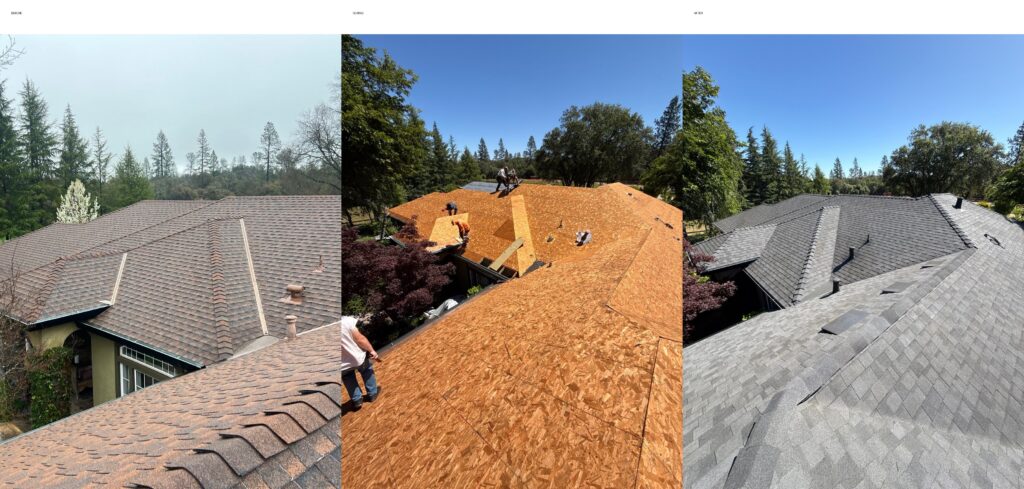
Documenting Every Stage of a Roof Replacement
Photo documentation doesn’t stop after the inspection.
We continue taking photos throughout the roofing project to create a complete record of the work being performed.
Before Construction Begins
We document the existing condition of the roof.
This provides a baseline record and helps homeowners understand what issues are being addressed.
During Tear-Off
Photos often reveal conditions that couldn’t be fully evaluated until the old roofing materials were removed.
This may include:
- Damaged decking
- Hidden water intrusion
- Dry rot
- Previous repair work
During Installation
We document key stages of the roofing process, including:
- Roof deck preparation
- Underlayment installation
- Flashing installation
- Ventilation components
- Roofing material installation
This helps verify that each step was completed correctly.
Final Completion Photos
Once the project is complete, we provide photos showing the finished roofing system.
Homeowners receive a visual record of the completed work and can see the transformation from start to finish.
How a Roof Inspection Builds Trust and Transparency
One of the biggest concerns homeowners have when hiring a contractor is not knowing what happens once work begins.
Roofing projects involve significant investments, and homeowners deserve clear communication throughout the process.
Detailed photo documentation helps eliminate uncertainty.
Rather than wondering whether a repair was completed or whether a recommendation was necessary, homeowners can review the visual evidence themselves.
That’s one reason photo documentation has become such an important part of our process.
Why Homeowners Appreciate Having a Complete Project Record
One benefit many homeowners don’t think about until after their project is complete is having a visual record of the work that was performed.
When a roof replacement is finished, much of the important work is hidden beneath the shingles. Underlayment, flashing details, ventilation improvements, and decking repairs aren’t visible from the ground once the project is complete.
Because we document every stage of the process, from the roof inspection to the final product, homeowners can look back and see exactly what was done on their home.
A Record of the Work Performed
Our photo documentation provides a clear timeline of the project, including:
- The roof’s condition before work began
- Areas of concern discovered during the project
- Repairs made to the roof deck
- Installation of underlayment and flashing
- Progress throughout construction
- Final completion photos
For many homeowners, these photos provide peace of mind because they can see the work rather than simply read about it on an invoice.
Helpful for Future Planning
A documented roofing project can also be useful years later.
Whether you’re planning future maintenance, comparing the roof’s condition over time, or simply looking back at the improvements made to your home, having detailed photos creates a valuable record.
Many of our customers appreciate knowing they have a complete visual history of their roofing project available if questions ever arise in the future.
Our Commitment to a Thorough Roof Inspection
At Richard Hockett Roofing, we believe homeowners should understand the condition of their roof and the work being performed on their home.
That’s why we invest time into drone inspections, detailed photography, and thorough project documentation.
We don’t take hundreds of photos because it’s required.
We do it because transparency creates trust, and trust is the foundation of every successful roofing project.
Check out some of our work on our social media pages.
If you’re not sure what condition your roof is in, you can book your roof inspection online today and we’ll give you clear answers.