
Roof leaks can be confusing when they only happen during a heavy storm. Your ceiling stayed dry through a light shower last week, but now there’s a drip near the hallway or a fresh stain above the window. What changed?
For homeowners in Folsom, El Dorado Hills, and the surrounding foothills, different storms can expose different roof weaknesses. Rainfall intensity, wind direction, and the length of a storm can all affect when water becomes noticeable inside.
A leak that stops when the rain slows still deserves attention. Understanding the possible causes helps you explain the problem to a roofer and make an informed decision about the next step.
Why Roof Leaks Appear During Heavy Rain
Your roof works as a system. Its outer covering, protective layers underneath, metal flashing, and drainage details all help manage water. A weakness in one area may become noticeable only under certain conditions.
How Wind-Driven Rain Can Cause Roof Leaks
Rain doesn’t always fall straight down. Strong winds can drive it toward roof openings and vulnerable transitions from a different angle. That helps explain why one storm causes a leak while another passes without a visible problem.
GAF’s guidance on roof storm damage explains that wind-driven rain can enter through openings in the roof. gaf.com
More rain makes drainage problems noticeable
A downpour sends more water toward valleys, gutters, and roof edges over a shorter period. Leaves, pine needles, or other debris can interfere with that flow. Depending on the roof detail, backed-up water may reach areas that normally stay protected.
Longer storms can also allow more moisture to enter through an existing defect before you notice a drip. The timing is a useful clue, but it doesn’t identify the cause by itself.
Common Trouble Spots Behind Roof Leaks
Roof Leaks Around Chimneys and Flashing
Flashing is the material, usually metal, that directs water away from joints and openings. You’ll find it around chimneys and skylights and where roofing meets a wall.
Damaged or poorly installed flashing can create an entry point even when the surrounding roof covering looks fine. According to GAF’s roof leak repair guidance, deteriorated flashing is one common cause of water intrusion around roof penetrations. GAF
Vent pipes and their protective seals
Plumbing vent pipes pass through the roof and need properly installed flashing around their bases. Some assemblies include rubber seals that can deteriorate over time.
Sun exposure and changing temperatures can contribute to wear. A roofer should check the complete assembly, including the surrounding roofing, rather than assume a fresh bead of sealant will solve the problem.
Valleys and debris collection areas
A roof valley is the channel where two roof slopes meet. It carries runoff from both sides, making clear drainage especially important.
On tree-lined foothill properties, leaves and pine needles can collect in these channels. A professional inspection can determine whether debris, damaged materials, or an installation issue is affecting how water moves through the valley.
Damaged shingles or problems beneath tile
Missing, cracked, or displaced roofing materials deserve a closer look. On tile roofs, the visible tiles are only part of the system. Underlayment—the protective layer beneath the tiles—and flashing also help keep water out.
That means intact-looking tile doesn’t rule out an underlying problem. An inspection may require closer investigation beneath selected tiles to understand the condition of those hidden components.
Why Roof Leaks Can Cause Stains Farther Away
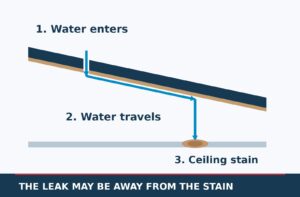
It’s natural to assume the roof opening is directly above the wet spot. Sometimes it is, but water can travel along roof decking, framing, or other surfaces before reaching the ceiling.
For example, moisture may enter near a roof penetration and follow a framing member before dripping into insulation farther away. The stain tells you where water became visible, which may differ from where it entered.
GAF also notes in its roof vent pipe leak guidance that water travels, making the source difficult to determine. gaf.com
This is why diagnosis matters before repairs begin. Plumbing leaks and condensation can also create moisture symptoms, so the inspection should consider the evidence rather than automatically blame the roof.
What to Do When Roof Leaks Start
Start with what you can safely observe from inside your home or from the ground. Stay off a wet roof, and leave climbing, temporary roof coverings, and leak tracing to professionals.
If it is safe, move belongings away and place a container beneath a drip. Keep clear of sagging ceilings and water near electrical fixtures. A bulging ceiling or water entering a light fixture calls for urgent professional help.
Useful details to share with your roofer include:
- Photos of the stain or drip, including a wider view of its location.
- When it started and whether it continued after the rain stopped.
- Whether wind accompanied the rain.
- Whether the same spot leaked during an earlier storm.
- Any previous repairs near that part of the home.
Don’t repaint the stain before documenting it. Even if the ceiling later feels dry, share what happened so the roofer can investigate the pattern.
Does a Leaking Roof Need Repair or Replacement?
A leak alone doesn’t determine whether you need a repair or replacement. An isolated flashing problem on an otherwise serviceable roof may call for a targeted repair. Widespread deterioration or repeated failures may lead to a different recommendation.
The condition of the surrounding materials, any concealed damage, and the roof’s repair history all matter. Ask your contractor to explain the findings and what the proposed work will address.
At Richard Hockett Roofing, we document what we find and explain the available options. For homeowners in our Folsom service area, that means a clearer understanding of the problem before deciding how to move forward.
Get Clear Answers Before the Next Storm
Intermittent roof leaks can be easy to put off once the weather clears. But a dry ceiling between storms doesn’t confirm that the source has been corrected.
A thorough inspection connects your observations with the roof’s actual condition. Photos, clear explanations, and a defined repair scope help you understand what needs attention and why.
If you’re not sure what condition your roof is in, you can book your roof inspection online today and we’ll give you clear answers.