
Roof popping noises can be startling, especially when they begin after sunset or seem to come from directly above a bedroom. The good news is that an occasional pop does not automatically mean the roof is failing. Roof materials, framing, flashing, and attic components can all move slightly as temperatures and operating conditions change.
The difficult part is that several different sources can sound almost identical from inside the house. Understanding when the noise occurs and what else is happening around it can help a roofing professional narrow down the cause.
Roof Popping Noises Often Begin With Temperature Changes
Roof surfaces experience much larger temperature swings than the air around your home. On a sunny afternoon, roofing and exposed metal components may become considerably warmer than they were that morning. When the sun goes down, those materials begin cooling and contracting.
That small amount of movement can release tension at a seam, fastener, framing connection, or point where two materials meet. The result may be a single pop, a brief series of ticks, or a cracking sound that travels through the framing.
This can be noticeable around Folsom and nearby communities because clear skies, strong sun, and cooler evenings can create a fairly quick temperature transition. Homeowners throughout Northern California may hear the sounds most often near sunset, after the heat turns on, or during a sudden weather change.
Why the Sound Can Seem Louder at Night
A roof does not necessarily move more at night, but nighttime is when many homeowners first notice it. The house is quieter, outdoor traffic has slowed, and family activity is winding down. A small movement that disappeared into the daytime background can suddenly sound dramatic.
Cooling also happens unevenly. A shaded roof section may begin contracting before a west-facing area that received direct afternoon sun. Flashing, gutters, vents, shingles, decking, and framing do not all change temperature at the same rate. That uneven timing helps explain why roof cracking sounds may appear in different locations or occur in a short sequence.
Different Roofing Materials Move in Different Ways
Every roofing system contains more than its visible surface. Composition shingles sit over underlayment and decking. Tile and metal systems have their own attachment and flashing details.
Homeowners with Metal roofing may notice expansion-and-contraction sounds more readily because long metal sections respond to temperature changes. Properly designed metal systems account for thermal movement through compatible fasteners, clips, seams, and installation details.
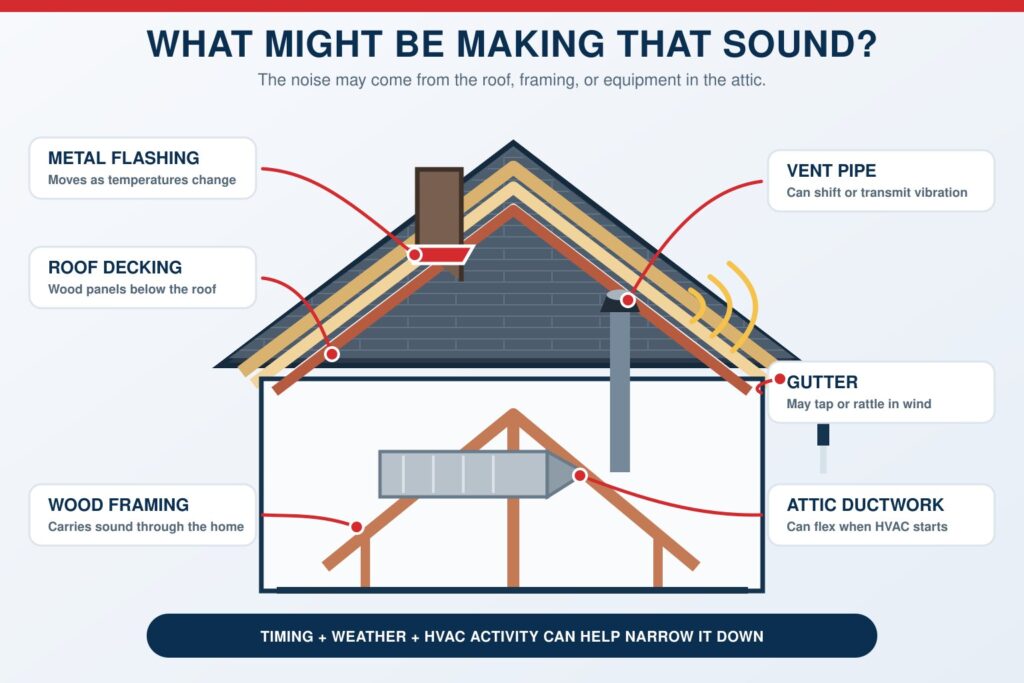
That does not mean every pop comes from the roof covering. Sheet-metal flashing, gutters, downspouts, attic ducts, and vent components can also flex or shift. Composition shingles generally do not create the same pronounced metallic sound, but movement in the decking or framing below them may still be heard indoors.
Roof Cracking Sounds May Come From Wood Framing
Wood is not perfectly motionless. Roof decking and framing can change slightly as temperature and moisture conditions change. Connections between rafters, trusses, decking, walls, and ceiling materials may transfer a small movement through the structure as an audible creak or pop.
The sound may seem to come from one spot even when it traveled along a framing member.
An isolated sound without stains, sagging, or visible movement may simply be ordinary building movement. However, a roofer should not diagnose the cause from the sound alone. The timing, frequency, roof design, recent work, weather, and visible conditions all provide important context.
The Noise May Actually Be Coming From the Attic
The attic contains several components capable of making surprisingly roof-like noises. Metal ductwork can flex when a heating or cooling system starts. Vent pipes and their surrounding materials may respond to temperature changes. Exhaust equipment can vibrate, and an unsecured cover or damper may tap when the wind changes.
Tree branches, animals, and falling debris can also sound surprisingly loud. A branch touching the roof may only make noise in one wind direction, making the source difficult to recognize indoors.
Homeowners should note whether the sound follows the HVAC cycle, sunset, wind, rain, or animal activity. That information is often more useful than trying to identify the source from inside the room.
Wind Can Reveal a Loose Exterior Component
Roof popping noises that occur mainly during gusty weather deserve a closer look. Wind may move a loose piece of flashing, an unsecured gutter section, a vent cover, or another exterior component. The noise may present as tapping, rattling, flapping, or an occasional sharp bang.
That does not prove the roofing itself is loose. It does mean the pattern is worth documenting and evaluating, especially if the sound is new after a storm. Avoid climbing onto the roof to search for it. Wind and sloped surfaces make an already risky task more dangerous.
Are New Roof Popping Noises Part of a Replacement?
A homeowner may become more aware of unfamiliar sounds after a roof replacement. New sheet-metal details, vents, gutters, or other components can transmit sound differently from the materials that were removed. The homeowner may also simply be paying closer attention because the work was recently completed.
Minor movement does not establish that the installation is defective. However, a new or persistent sound deserves questions. A professional contractor should review when it happens, check the relevant area, and explain the findings.
Photo documentation from the project can be especially helpful. Images of the decking, flashing, underlayment, ventilation, and finished roof provide a record that can be reviewed alongside current conditions.
When Roof Cracking Sounds Deserve an Inspection
The noise matters most when it appears with another change. Schedule an evaluation if you notice:
- A new water stain, active leak, or damp attic material
- Visible sagging, rippling, or movement along the roofline
- Repeated banging or rattling whenever the wind increases
- A sound that began immediately after a storm or impact
- Loose gutters, flashing, vents, or roofing visible from the ground
- A sudden increase in the volume or frequency of the noise
If you see structural movement, significant sagging, or another immediate safety concern, keep people away from the affected area and contact an appropriate professional promptly.
How a Professional Inspection Narrows Down the Cause
A useful inspection begins with questions. When did the sound start? Does it happen after sunset, during an HVAC cycle, or only in wind? Has roofing, solar, attic, gutter, or ventilation work been completed recently?
The roofer can then review accessible conditions from the ground, roof, and attic when appropriate. Drone images help document difficult-to-view sections, while close-up photographs show flashing, vents, fasteners, gutters, and surface conditions.
The goal is not to promise that every intermittent noise will occur during the appointment. It is to look for evidence, rule out visible roofing concerns, and explain any limitations clearly. Organized documentation also gives the homeowner a useful record if the sound changes later.
You Do Not Have to Guess What the Sound Means
Most homeowners cannot identify roof popping noises by standing in a bedroom and listening to the ceiling. The sound could come from harmless temperature movement, attic ductwork, wood framing, wind-driven components, or a condition that needs maintenance.
Pay attention to the pattern, look for related changes from a safe location, and avoid assuming the worst. If roof cracking sounds are persistent, getting louder, or accompanied by a leak or visible movement, a documented inspection can provide much better information than guesswork.
If you’re not sure what condition your roof is in, you can book your roof inspection online today and we’ll give you clear answers.