
What to Do If a Tree Damages Your Roof After a Storm
Storms can move through El Dorado County quickly, bringing heavy rain, strong winds, and falling debris. When trees are weakened by saturated soil and powerful gusts, it doesn’t take much for a large branch — or even an entire tree — to come crashing down onto a home. If you’re dealing with this situation, understanding the right steps for tree damage roof repair after storm conditions is critical to protecting your home and preventing further structural issues. Discovering that a tree has hit your roof can feel overwhelming. Beyond the visible damage, there may be hidden moisture intrusion, compromised decking, or structural concerns that are not immediately obvious. Acting quickly and knowing what to do next can make all the difference in minimizing repair costs and ensuring your home remains safe and secure.
Why Storms Cause Trees to Fall
Trees become especially dangerous during and after storms because the conditions weaken their stability. Heavy rainfall saturates the soil, which loosens root systems and reduces the tree’s ability to stay anchored. At the same time, wind places enormous pressure on branches and trunks. Even healthy trees can snap under these conditions, while older or diseased trees are at an even greater risk of failure.
In wooded areas throughout El Dorado County, many homes are surrounded by mature pines and oaks. These trees provide shade and beauty, but they also increase the risk of storm-related roof damage. Pine trees in particular can grow tall and heavy, and when they fall, the impact can be severe.
Even smaller branches can cause significant roofing issues. A limb does not need to be large to puncture shingles or crack roof vents. Sometimes the damage looks minor from the ground but turns out to be much more extensive once inspected up close.
The Types of Damage a Fallen Tree Can Cause
When a tree hits a roof, the damage can range from cosmetic to structural. In some cases, a small branch may only break a few shingles. In more serious situations, a large tree can compromise the structural framing of the home.
One of the most common issues from, tree damage to the roof is punctured shingles and decking. If a limb pierces through the surface of the roof, it can create a direct pathway for water to enter the attic. Once moisture enters, it spreads quickly through insulation and wood framing.
There will always be signs of tree damage, sometimes they are visible from the ground, and other times the problems arise after periods of time.
Structural damage is more severe and typically occurs when a large tree or heavy trunk falls onto the home. Rafters and trusses can crack under the weight. In extreme cases, sections of the roof may sag or partially collapse.
Flashing and roof penetrations are also vulnerable. Chimneys, skylights, and vent pipes are often damaged when branches slide or scrape across the roof during impact. Gutters and fascia boards are commonly torn away as well.
Even if the damage appears minor, there is often hidden moisture intrusion that cannot be seen without a professional inspection. This hidden damage is what frequently leads to mold growth and wood rot if repairs are delayed.
The First Step: Make Sure Everyone Is Safe
Safety should always be the first priority after storm damage. If a tree has fallen on your roof, carefully assess whether it is safe to remain inside the home. If you notice sagging ceilings, cracking sounds, exposed electrical wiring, or significant structural damage, it is best to evacuate until the property can be evaluated.
Avoid standing directly beneath the impacted area. The added weight of a tree can shift unexpectedly, especially if wind continues or if the tree is partially supported by the structure. Never attempt to climb onto a storm-damaged roof. Wet surfaces, loose debris, and structural instability make it extremely dangerous.
If there is any doubt about safety, contacting emergency services is always the right decision.
Document the Damage Thoroughly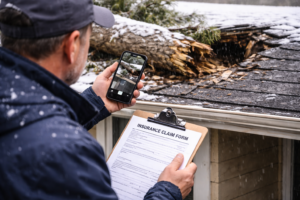
Once you are certain it is safe to remain inside, begin documenting the damage. Take clear photographs from multiple angles, both outside and inside the home. Capture images of the tree itself, the area of roof impact, and any interior damage such as water stains, ceiling cracks, or fallen debris.
Detailed documentation will play an important role when filing your insurance claim. The more evidence you have of the storm-related damage, the smoother the claims process is likely to be.
Contact Your Insurance Company Promptly
Most homeowners insurance policies cover tree damage if it was caused by wind or a storm event. It is important to notify your insurance company as soon as possible. Delays can complicate claims and may raise questions about secondary damage.
When speaking with your insurance provider, ask about coverage for emergency mitigation services such as tarping or debris removal. Clarify your deductible and find out what documentation they require. Keeping records of all communication and receipts will help protect you throughout the process.
Prevent Further Water Intrusion
After a roof has been punctured or compromised, water intrusion becomes the greatest concern. Even a small opening can allow rainwater to enter the attic and soak insulation. In California’s changing weather patterns, a stormy week can quickly be followed by sunny days. That heat can accelerate moisture damage and mold growth inside the home.
Professional roofers can install emergency tarping to temporarily seal exposed areas. This step is critical in preventing further interior damage while waiting for permanent repairs. Attempting to tarp a roof yourself can be dangerous and is not recommended.
Why a Professional Roof Inspection Is Essential
Tree damage is rarely limited to what you can see from the ground. A thorough inspection by a qualified roofing contractor is essential to determine the full extent of the problem. During an inspection, a contractor will examine the decking, underlayment, flashing, structural supports, and attic space for hidden moisture or cracks.
In many cases, what appears to be minor shingle damage may involve compromised decking underneath. Left unaddressed, that decking can rot over time and weaken the entire roofing system.
A professional inspection provides clarity about whether you need a simple repair or more extensive restoration work.
Repair or Replacement: What Determines the Outcome
The decision between repairing a roof and replacing it depends on several factors. If the damage is limited to a small section and the rest of the roof is in good condition, a repair may be sufficient. However, if the impact has affected multiple areas, compromised structural supports, or if the roof is already nearing the end of its lifespan, replacement may be the better long-term solution.
Insurance adjusters often work alongside roofing contractors to assess the scope of work. The goal is not only to fix visible damage but to restore the roof’s integrity and protective function. To help decide which avenue would be the best for you, whether that be a roof repair or roof replacement, there are multiple resources that can help you decide.
The Hidden Risks of Delaying Repairs
One of the most common mistakes homeowners make is delaying repairs because the damage “does not look that bad.” Unfortunately, water has a way of traveling along beams and insulation, appearing far from the original impact site.
Within 24 to 48 hours, trapped moisture can begin encouraging mold growth. Wet insulation loses its effectiveness, increasing energy costs. Over time, gradual wood rot can weaken framing and decking.
Addressing tree damage quickly reduces the risk of compounding problems and larger repair bills later.
Preventing Future Tree-Related Roof Damage
While no home is completely stormproof, proactive maintenance significantly reduces risk. Regularly trimming overhanging branches helps prevent limbs from scraping or falling onto the roof. Removing dead or diseased trees eliminates some of the highest-risk hazards.
It is also wise to inspect trees after extended periods of rain. If you notice leaning trunks or exposed roots, having an arborist evaluate the tree may prevent future disaster. This will help you prevent any tree damages that lead to roof repairs.
Scheduling annual roof inspections ensures your roofing system remains in strong condition and better prepared to withstand severe weather.
The Value of Working With a Local Roofing Company
Storm damage restoration requires more than basic shingle replacement. It demands an understanding of local weather patterns, tree types, and building codes. A local roofing company serving El Dorado County will be familiar with the unique challenges posed by pine-heavy properties and shifting seasonal conditions.
Working with a licensed and insured local contractor also protects you from out-of-town “storm chasers” who often appear after severe weather events. Choosing an established local company ensures accountability, proper permitting if needed, and ongoing support if future issues arise.
Final Thoughts
A tree falling on your roof is stressful and unexpected, but taking prompt and informed action makes all the difference. Ensuring safety, documenting the damage, contacting your insurance company, and scheduling a professional inspection are the most important steps you can take.
Your roof is your home’s primary defense against the elements. When it has been compromised by storm-related tree damage, swift action protects not only your structure but also your family’s safety and long-term investment.
If your home in El Dorado County has experienced storm damage, having a professional evaluate the roof as soon as possible can prevent minor issues from turning into major repairs. Acting quickly today can save you significant expense and stress tomorrow.