
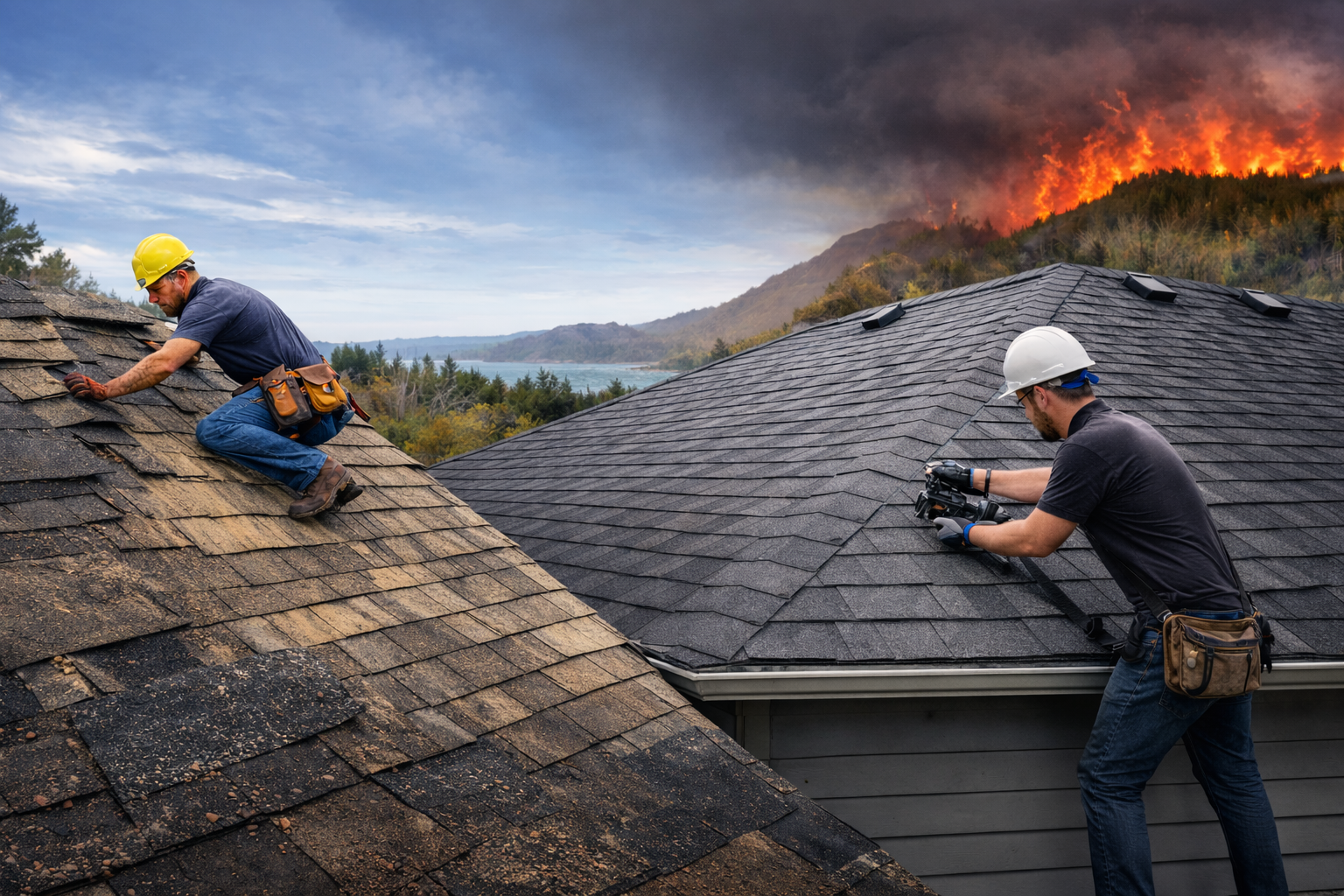
Your roof protects everything underneath it — your family, your belongings, and the structure of your home. When problems start to appear, one of the most common questions homeowners ask is: Should I repair my roof, or is it time to replace it completely? The answer depends on several factors, including the age of your roof, the extent of the damage, and your long-term plans for your home. For homeowners in Northern California, weather conditions such as heavy winter rains, strong winds, coastal moisture, and wildfire risks also play an important role in this decision. Understanding the difference between repair and replacement — and when each option makes sense — can help you make the most cost-effective and responsible choice when deciding between a roof repair vs. replacement.
Understanding Roof Repair
Roof repair focuses on fixing specific damaged areas without replacing the entire system. This could involve replacing missing or cracked shingles, repairing flashing around chimneys or vents, sealing small leaks, or addressing minor storm damage. When a roof is relatively new and the damage is limited to one section, repairs are often the most practical solution. A properly completed repair can restore your roof’s protection and extend its lifespan without the larger investment of a full replacement. However, repairs only address surface-level or localized issues. If the underlying structure is compromised or deterioration is widespread, repairs may only serve as a temporary fix.
When Roof Repair Makes Sense
In many cases, repairing your roof is the right decision, especially if the overall structure is still in good condition.
If your roof is less than 10 to 15 years old and has been properly maintained, isolated damage from wind, fallen debris, or minor leaks can often be corrected without replacing the entire system. For example, if a recent storm dislodged a few shingles or caused minor flashing damage, a targeted repair may be all that’s necessary. Repair can also make sense if the damage truly is localized. A small leak confined to one area does not automatically mean your entire roof is failing. With a professional inspection, a contractor can determine whether the issue is isolated or part of a larger pattern of deterioration.Budget considerations sometimes play a role as well. If the roof still has significant remaining lifespan, a repair can provide protection while allowing you to plan and budget for a future replacement when the time is right.
When Roof Replacement Is the Smarter Option
There comes a point when continuing to repair an aging roof becomes more expensive than replacing it. If your roof is nearing the end of its expected lifespan, replacement is often the more financially sound decision. Asphalt shingle roofs typically last 20 to 30 years, while architectural shingles may last longer. Tile and metal roofs can last decades beyond that, but they are not immune to wear. When materials begin to deteriorate across large sections, repairs become less effective.
Frequent leaks are another strong indicator that replacement may be necessary. If you’ve already completed multiple repairs over the past few years and new problems continue to appear, it often means the system as a whole is breaking down. Water intrusion can damage underlayment, decking, insulation, and even interior structures. In these cases, replacing the roof stops the cycle of ongoing repairs and prevents escalating damage.Significant structural issues also point toward replacement. Sagging roof lines, soft spots in the decking, widespread shingle curling, heavy granule loss, and extensive moss growth are all signs that your roof may be failing beyond simple repair.
Considering Northern California’s Climate
Roofing decisions in Northern California come with unique environmental considerations. Winter storms can bring heavy rainfall and strong winds that expose even small vulnerabilities. What starts as a minor leak can quickly become interior water damage during a prolonged rain season. Coastal regions and areas with frequent fog often experience moss growth and prolonged moisture exposure, which can accelerate shingle deterioration.
Wildfire risk is another major factor. Many homes fall within Wildland-Urban Interface (WUI) zones that require fire-resistant roofing materials. If your current roof does not meet modern Class A fire-rating standards, replacement may not only improve safety but also ensure compliance with local building codes and potentially lower insurance risks. Because of these regional challenges, it’s important to think beyond immediate repairs and consider how your roof will perform over the next decade. When considering whether to have a roof replacement vs. repair, it is also valuable to decide which type of roof is going to be best for you. If you live locally, it can be helpful to check out El Dorado County roofing options to help choose which route to go.
Cost Differences Between Repair and Replacement
Cost is often the primary factor homeowners consider. Roof repairs typically cost significantly less upfront than full replacements. Minor repairs may be a few hundred dollars, while more involved repairs can range into the low thousands depending on complexity. A full roof replacement, on the other hand, represents a larger investment. In Northern California, replacement costs vary based on size, material, and structural complexity. While the upfront expense is higher, replacement eliminates recurring repair costs. This route provides a completely new roofing system with a fresh warranty and lifespan. When evaluating cost, it’s important to look beyond the immediate price tag. If repeated repairs are adding up year after year, those cumulative expenses may eventually exceed the cost of replacement. In that scenario, replacing the roof sooner can actually save money in the long run.
Long-Term Value and Home Equity
A new roof does more than stop leaks. It improves energy efficiency, enhances curb appeal, and increases overall property value. Modern roofing materials often provide better insulation and reflective properties, helping regulate indoor temperatures during Northern California’s hot summers. Improved ventilation systems can also reduce moisture buildup and extend the life of your home’s structure.
If you’re planning to sell your home within the next few years, a new roof can be a strong selling point. Buyers are often cautious about purchasing a property with an aging roof, knowing it may soon require replacement. Installing a new roof before listing can prevent negotiations over repair credits and make your home more attractive on the market.
Questions to Ask Before Making a Decision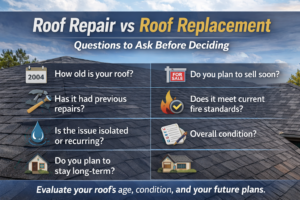
Before deciding between repair and replacement, take a moment to evaluate your situation carefully.
Consider how old your roof is and whether it has had previous repairs. Think about whether the current issue is isolated or part of a recurring pattern. Reflect on your long-term plans for the home — whether you intend to stay for many years or plan to sell in the near future.
It’s also important to assess whether your current roof meets today’s fire safety standards and building codes. Upgrading to modern materials may offer benefits that go beyond simple leak prevention.
The Importance of a Professional Inspection
One of the biggest mistakes homeowners make is attempting to diagnose roof problems from the ground. Surface damage does not always reveal what’s happening beneath the shingles or tiles.
A professional inspection can determine whether moisture has penetrated deeper layers, whether decking remains structurally sound, and whether ventilation is functioning properly. An experienced roofing contractor will evaluate the entire system and provide honest guidance based on the overall condition — not just visible damage. This evaluation is the best way to help determine whether your home needs a roof repair vs replacement.
In some cases, what appears to be a major issue can be resolved with a straightforward repair. In others, what seems minor may reveal widespread deterioration once properly inspected.
Making the Right Choice for Your Home
There is no universal answer to the roof repair vs. replacement question. Every roof, home, and homeowner situation is different.
Repairs are often the right choice when the roof is relatively young, damage is limited, and the overall structure remains solid. Replacement becomes the smarter investment when the roof is aging, problems are recurring, or structural integrity is compromised.
For Northern California homeowners, weather exposure, moisture levels, and wildfire risk add additional layers to consider. Thinking long-term rather than focusing solely on short-term cost will help ensure your home stays protected for years to come.
If you’re unsure which option is right for your property, scheduling a professional inspection is the best first step. A thorough evaluation will give you clarity, prevent unnecessary expenses, and help you move forward with confidence.
For more information on this topic, check out this article written by GAF.


Recent Comments