
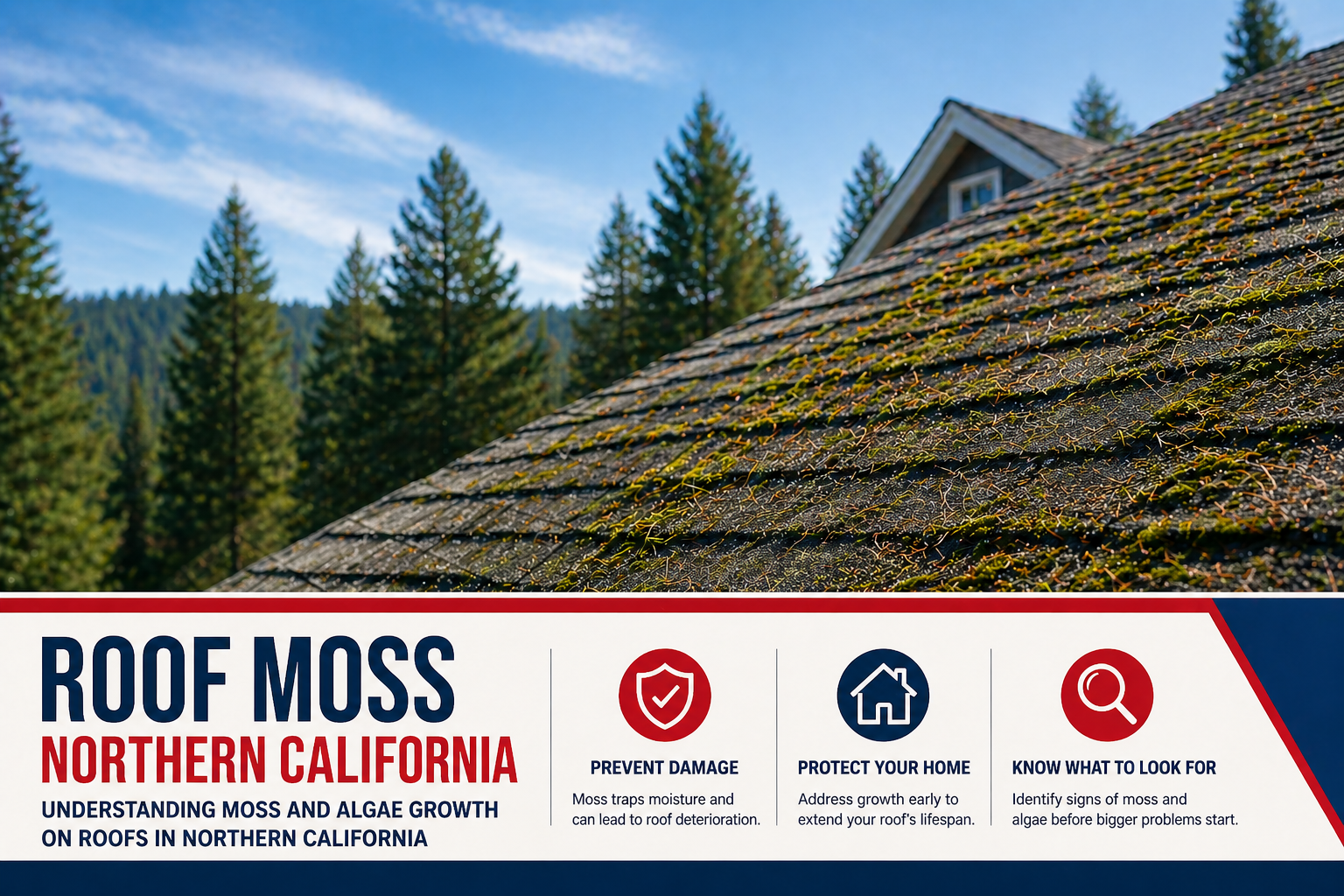
If you’ve noticed green patches, dark streaks, or buildup on your roof, you’re not alone. These are some of the most common issues homeowners deal with when it comes to roof moss Northern California conditions, especially in foothill areas with heavy tree coverage and seasonal moisture.
At first glance, moss and algae may seem like a cosmetic problem. But over time, they can affect how your roof performs—particularly when combined with heat, shade, and debris buildup. In many of the homes we inspect throughout El Dorado County and surrounding areas, this type of growth is one of the earliest signs that a roof needs attention.
Understanding what causes it, how it impacts your roof, and when to take action can help you avoid more expensive issues down the line.
Why Roof Moss Northern California Homes Deal With Is So Common
Roofs in Northern California, especially in foothill communities, are exposed to a combination of conditions that make moss and algae growth more likely. Between cooler nights, morning condensation, and shaded roof sections, moisture tends to linger longer than homeowners expect.
When that moisture is combined with pine needles, leaves, and general debris, it creates the perfect environment for organic growth to take hold. This is something we commonly see on homes in Placerville, Camino, and other wooded areas where sunlight is limited.
Over time, roof moss Northern California homes experience becomes more than just a surface issue. Heat and UV exposure during the summer months can accelerate how roofing materials break down, especially when moisture is consistently trapped against the surface.
What Moss and Algae Actually Do to Your Roof
Not all roof buildup is the same, and it’s important to understand how moss and algae affect your roof differently.
Algae typically appears as dark streaks across shingles. While it’s often more cosmetic, it can spread and make a roof look older than it actually is. Moss, on the other hand, is more aggressive. It grows in thicker patches and can hold moisture directly against the roof surface.
When moss develops, it can slowly lift shingles and prevent them from laying flat. This allows moisture to sit underneath, which can lead to premature wear. In foothill areas, where roofs already deal with moisture and shade, this becomes a bigger concern over time.
We regularly see situations where moss buildup has gone unnoticed until it begins affecting the structure beneath the shingles. In some cases, trapped moisture can even contribute to early stages of dry rot in vulnerable areas.
How Roof Moss Northern California Conditions Impact Roof Lifespan
One of the biggest misconceptions is that moss and algae are only surface-level problems. In reality, they can have a direct impact on how long your roof lasts.
When moisture is consistently held against roofing materials, it speeds up deterioration. Add in the intense summer heat and UV exposure common in Northern California, and that process happens even faster.
In many of the homes we evaluate, moss growth is one of the factors that contributes to:
- Faster shingle wear in shaded areas
- Weak points developing across the roof surface
- Increased likelihood of future leaks
Understanding how roof moss Northern California conditions affect your roof helps explain why some roofs age faster than expected in foothill climates.
Is Roof Moss Northern California Growth Dangerous?
Moss and algae aren’t always immediately dangerous, but they shouldn’t be ignored. The level of concern depends on how widespread the growth is and how long it’s been present.
Small patches in isolated areas may not require immediate action, especially if the roof is otherwise in good condition. However, once moss begins to spread or thicken, it becomes more of a concern.
In many inspections, we find that moss growth is one of the early warning signs that a roof is starting to break down—even if there are no visible leaks yet. This is especially true in shaded sections where moisture tends to linger.
It’s also worth noting that in foothill environments, buildup like this can increase fire risk during dry summer months if debris and organic material are left sitting on the roof.
Can You Safely Remove Moss and Algae?
Moss and algae can be removed, but the method matters more than most homeowners realize.
We often see roofs that have been damaged by improper cleaning techniques. High-pressure washing, for example, may make a roof look clean quickly, but it can strip away the protective surface of shingles and shorten the lifespan of the roof.
Safer cleaning approaches focus on preserving the roof rather than just improving appearance. These typically involve low-pressure methods and targeted treatment of affected areas.
In many cases, cleaning can be helpful—but only if the roof is still in good condition to begin with.
When Cleaning Makes Sense—and When It Doesn’t
Cleaning can be a practical option when moss or algae is caught early and the roof is still structurally sound. In those situations, removing buildup can help extend the life of the roof and prevent further issues.
However, cleaning isn’t always the right solution. If the roof is already worn, brittle, or showing signs of deeper damage, cleaning may only provide a temporary improvement.
This is something we run into fairly often. Homeowners invest in cleaning when the roof actually needs repair or replacement. That’s why it’s important to evaluate the full condition of the roof before deciding what to do.
How Professional Evaluation Makes a Difference
Before making any decisions about cleaning, it helps to understand what’s really happening on your roof.
At Richard Hockett Roofing, we take a straightforward, by-the-books approach to evaluations. This is something we do regularly for homeowners throughout El Dorado County and nearby foothill communities.
In many cases, what looks like a cleaning issue from the ground turns out to be something more when viewed up close. That’s why we use drone inspections when appropriate. It allows us to safely capture detailed images so you can see exactly what’s going on with your roof.
From there, everything is clearly documented and explained. You’ll know what type of growth is present, whether cleaning makes sense, and if there are any underlying concerns.
Our process is organized and transparent, so you’re never left guessing. The goal is to give you clear, accurate information so you can make the right decision for your home.
Preventing Moss and Algae Growth Over Time
While you can’t eliminate the conditions entirely, there are ways to reduce how quickly moss and algae develop, and ways to stop moss growth.
Regular maintenance goes a long way in foothill environments. Keeping debris off your roof and reducing moisture buildup can make a noticeable difference over time.
Helpful steps include:
- Trimming back overhanging branches
- Clearing pine needles and debris regularly
- Improving sunlight exposure where possible
- Making sure water drains properly
In many of the homes we inspect, simple maintenance steps like these can slow down how quickly moss returns.
Final Thoughts on Roof Moss Northern California Homes Deal With
Roof moss Northern California homeowners deal with is common, but it’s not something to ignore. In some cases, it’s manageable with proper cleaning and maintenance. In others, it’s a sign that the roof may need more attention.
Understanding how roof moss Northern California conditions affect your roof can help you stay ahead of costly issues and make better long-term decisions.
In our experience, homeowners who take the time to properly evaluate their roof avoid unnecessary work and get more life out of their roofing system.
If you’re not sure what condition your roof is in, you can book your roof inspection online today and we’ll give you clear answers.


Recent Comments