
Living in El Dorado County means your roof faces intense sun, long dry summers, and constant exposure to the elements. That’s why foothill roof maintenance is so important before temperatures start climbing. Small issues that seem minor in spring can quickly turn into bigger problems once summer heat sets in, especially in foothill communities like Placerville, Cameron Park, and El Dorado Hills.
Foothill Roof Maintenance for Summer Heat
Roofs in the foothills deal with a combination of environmental factors that accelerate wear faster than many homeowners expect. Between elevation, tree coverage, and temperature swings, materials are constantly expanding, contracting, and breaking down under UV exposure.
In El Dorado County, we also have to factor in wildfire risk and California’s Title 24 energy efficiency requirements, both of which make proper roof condition and ventilation even more important. A roof that isn’t performing well doesn’t just affect durability—it can impact energy efficiency and overall home safety.
Foothill roof maintenance becomes even more important in areas where heat, elevation, and tree coverage all contribute to faster material wear.
Even when a roof looks fine from the ground, there are often early signs of wear that only become obvious once summer heat intensifies.
Foothill Roof Maintenance Starts With a Simple Inspection
Before doing anything else, it helps to take a careful look at your roof from around your property. You don’t need to climb up—just walking the perimeter of your home can give you a good sense of whether anything looks off.
Pay attention to areas that look uneven or discolored, and check for anything that seems out of place. If something catches your eye, it’s worth taking a closer look before summer heat makes it worse.
Common things homeowners notice include:
- Shingles that appear lifted or out of alignment
- Dark streaks or patchy sections
- Debris collecting in roof valleys
- Metal flashing that looks loose or worn
These early signs don’t always mean you need major repairs, but they’re worth addressing sooner rather than later.
Clear Off Debris Before It Becomes a Problem
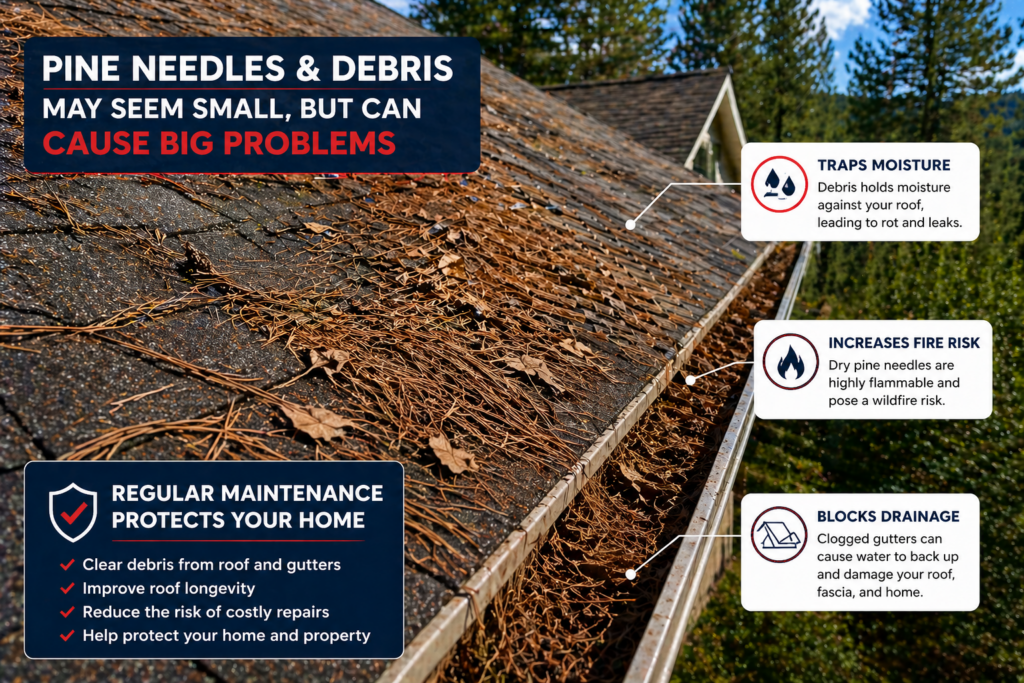
In foothill areas like Pollock Pines, Camino, and Placerville, debris buildup is one of the most common issues we come across during inspections. Pine needles, leaves, and small branches tend to collect in roof valleys and low spots, especially after windy days.
What makes this more serious in our region is how it interacts with heat and fire conditions. As temperatures rise, debris can trap moisture against the roof surface while also drying out and becoming a potential fire hazard.
We regularly see areas where debris has accelerated wear simply because it was left sitting too long. Regular foothill roof maintenance includes keeping your roof clear of pine needles and debris before summer begins.
Clearing your roof before summer helps:
- Reduce moisture buildup in vulnerable areas
- Improve drainage during occasional storms
- Lower fire risk during dry months
- Prevent premature breakdown of roofing materials
It’s a simple step, but one that makes a noticeable difference over time.
Don’t Overlook Your Gutters
Gutters are easy to forget about, but they play a key role in protecting your roof—even during dry seasons. If they’re clogged or not draining properly, water can get pushed back under the edges of your roof during occasional storms or even from morning condensation.
Instead of focusing only on cleaning, take a minute to observe how your system is functioning overall. Look for signs that water isn’t flowing where it should.
A quick check should include:
- Whether gutters are securely attached and level
- Any visible sagging or separation
- Downspouts directing water away from the home
- Evidence of past overflow or staining
Taking care of small gutter issues now helps prevent hidden damage later.
Watch for Early Heat-Related Wear
As summer approaches, heat-related damage tends to become more visible—especially on roofs that already have some age or minor wear.
In many of the homes we inspect throughout El Dorado County, and surrounding Sacramento areas, early signs of heat stress show up as subtle changes before they become obvious problems. Shingles may begin to curl slightly, lose granules, or appear uneven in certain sections.
You might notice:
- Shingles starting to dry out or crack
- Granules collecting in gutters or near downspouts
- Sections of the roof that look worn or faded
- Increased heat buildup inside the home
These issues don’t always cause immediate leaks, but they do weaken your roof’s ability to hold up through the hottest part of the year.
Make Sure Your Roof Can Breathe
Ventilation plays a critical role in how well your roof performs during the summer—especially in a climate like ours.
When heat gets trapped in the attic, it doesn’t just make your home uncomfortable. It also speeds up the aging process of your roofing materials and can lead to higher energy costs. Proper ventilation is a key part of foothill roof maintenance, especially with California’s Title 24 energy efficiency standards.
In many of the homes we evaluate, ventilation is either outdated or not properly balanced, which puts unnecessary stress on the entire roofing system.
If your home tends to hold heat—particularly in upper levels—it may be worth having your roof and attic airflow looked at more closely.
Check the Details: Flashing and Seals
Some of the most important parts of your roof are also the easiest to overlook. Flashing around chimneys, vents, and roof transitions is designed to keep water out of the most vulnerable areas.
With repeated heat exposure, these materials can dry out, shift, or develop small gaps. Sealants can crack, and metal components can loosen over time.
These aren’t always noticeable from a distance, but they’re one of the most common sources of future leaks. Addressing them early is typically much simpler than dealing with water damage later on.
Trim Back Nearby Trees
Trees are part of what makes foothill properties so appealing, but they can also contribute to ongoing roof wear. Branches that hang over your home tend to drop debris directly onto the roof and can even scrape against shingles during windy conditions.
Beyond wear and tear, overhanging limbs can create shaded areas where moisture lingers longer than it should. During summer, they also increase fire risk if dry material accumulates.
Trimming branches back helps reduce maintenance needs and protects your roof over time.
When It Makes Sense to Bring in a Professional
Even with a careful visual check from the ground, there are limits to what you can see. Roofing systems have multiple layers and critical details that require a closer look to properly evaluate.
A professional inspection gives you a clear understanding of your roof’s condition without the guesswork.
At Richard Hockett Roofing, we approach inspections with a focus on transparency and clear communication. When appropriate, we use drone technology to safely capture detailed images, so you can see exactly what’s going on with your roof—not just hear about it.
Everything is documented and organized in a way that’s easy to understand. You’ll know:
- What condition your roof is in
- What areas (if any) need attention
- What’s urgent vs. what can wait
We follow a straightforward, by-the-books process so homeowners aren’t left wondering what’s happening or what comes next. The goal is simple: give you clear, honest information so you can make the right decision for your home.
Staying Ahead With Consistent Foothill Roof Maintenance
Roof maintenance doesn’t need to be complicated, but it does need to be consistent—especially in the foothill climate.
From debris buildup and heat exposure to ventilation and fire considerations, there are a number of factors that can affect how your roof performs through the summer. The key is catching small issues early, before they turn into larger repairs.
For homeowners in El Dorado County, staying proactive with roof maintenance is one of the best ways to protect both your home and your investment long-term.
If you’re not sure what condition your roof is in, you can book your roof inspection online today and we’ll give you clear answers.