
How Long Does a Roof Last in California’s Foothill Climate?
How long does a roof last California homeowners can expect in a foothill climate? It’s one of the most common questions we hear from homeowners in areas like El Dorado Hills and Cameron Park.
Between the intense summer heat, seasonal storms, and daily temperature swings, your roof goes through more than most people realize.
Understanding how these conditions affect your roof can help you plan ahead and avoid costly surprises.
How Long Does a Roof Last California? What Actually Affects It
Instead of relying on generic lifespan charts, it’s more useful to understand what really impacts your roof in a foothill environment.
Because the reality is — two homes with the exact same roofing material can have very different outcomes.
When homeowners ask how long does a roof last California, the answer usually depends on more than just materials.
How Roofing Material Affects Roof Lifespan in California
Different roofing systems are built with different lifespans in mind, but local conditions can shift those timelines quite a bit.
- Standard asphalt shingles tend to wear out faster under constant sun exposure
- Architectural shingles usually hold up better against heat and wind
- Tile roofs can last decades, but the layers underneath often need attention sooner
- Metal roofs are extremely durable, but only when installed correctly
So while material gives you a starting point, it doesn’t tell you exactly how your roof will perform.
Location Impacts How Long a Roof Lasts in California
Even within the same neighborhood, roofs can age differently.
Some common factors we see in foothill areas:
- Homes with full sun exposure age faster due to heat and UV
- Properties in open areas deal with stronger wind
- Tree coverage can either protect the roof or create debris buildup and moisture issues
That’s why “average lifespan” numbers don’t always match what homeowners actually experience.
How Installation Quality Affects Roof Lifespan in California
This is one of the biggest differences we notice from roof to roof.
When a roof is installed properly — with correct flashing, ventilation, and attention to detail — it performs the way it’s supposed to.
But when shortcuts are taken, even small ones, it can lead to:
- Early wear and tear
- Leaks developing sooner than expected
- Ongoing repair issues
A properly installed roof doesn’t just last longer — it also gives you fewer headaches along the way.
How Maintenance Impacts How Long Your Roof Will Last
Roofs rarely fail overnight. Most problems build up slowly over time.
Homeowners who get the most life out of their roofs usually:
- Catch minor issues early
- Keep gutters clear so water flows properly
- Take care of small repairs before they spread
Without that, even a newer roof can start showing problems earlier than expected.
So How Long Does a Roof Last California Homes?
For most homes in California’s foothill climate, roofs tend to last somewhere in the 15–30 year range, depending on material, installation, and conditions.
Some systems can last much longer — but only when everything is done right from the start and maintained properly.
That’s why the better question isn’t just “How long should it last?”
It’s: “What condition is my roof actually in right now?”
Why Foothill Weather Impacts How Long Roofs Lasts in California
The foothill climate creates a combination of stress that adds up over time. This is one of the biggest reasons why the answer to how long does a roof last California can vary so much from home to home.
Heat and Sun Exposure
During summer, roof surfaces can get extremely hot. That heat:
- Dries out roofing materials
- Causes cracking and curling
- Speeds up overall aging
Even when there’s no visible damage, the sun is slowly breaking things down.
Daily Temperature Changes
Hot days followed by cooler nights cause expansion and contraction.
Over time, that movement can:
- Loosen fasteners
- Wear out seals
- Create small gaps that allow moisture in
Rain and Seasonal Storms
When winter storms hit, they tend to expose weak areas.
You might notice:
- Leaks forming during heavy rain
- Water getting in around flashing or penetrations
- Minor issues suddenly becoming obvious
Wind Exposure
In more open foothill areas, wind can be a factor as well.
It can:
- Lift or loosen shingles
- Crack or shift tiles
- Wear down edges and vulnerable spots
How Long Does a Roof Last California Homes in Foothill Areas?
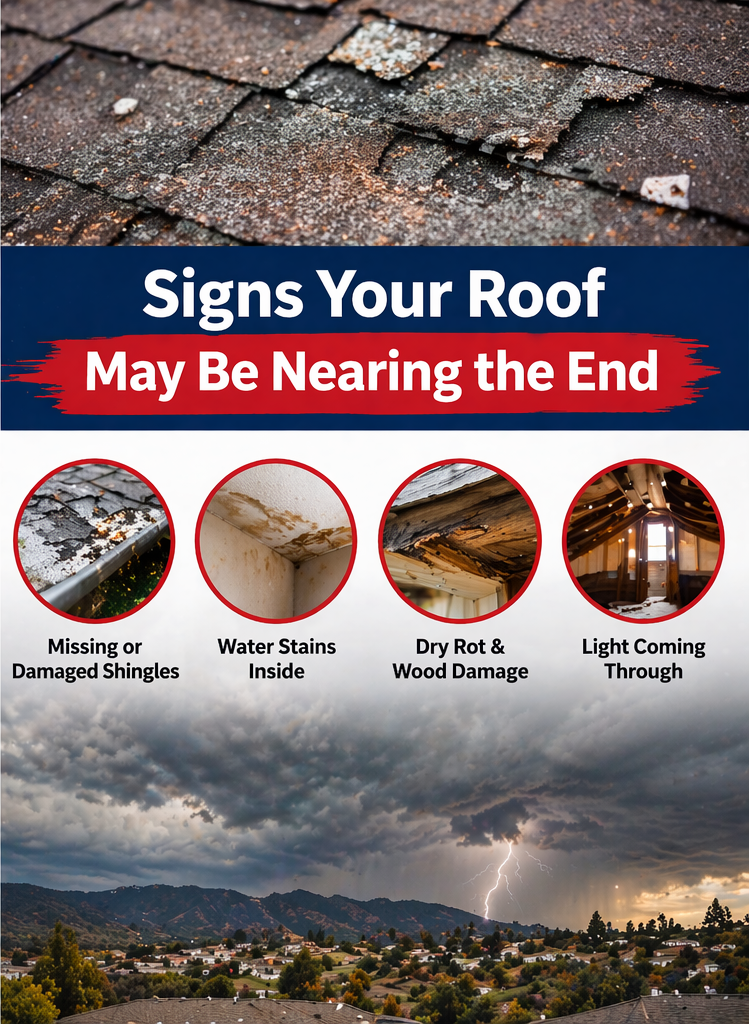
Signs Your Roof May Not Last as Long as Expected in California
Even if your roof isn’t at a certain age yet, there are clear signs that it may be getting close to needing attention.
What You Might See Outside
Outside, you might notice shingles starting to curl, crack, or go missing altogether. It’s also common to see granules collecting in gutters or areas of the roof that look uneven or discolored.
In foothill areas, dry rot is another common issue — especially around roof edges and areas where moisture gets trapped.
What You Might Notice Inside
- Water stains on ceilings or walls
- Musty smells in attic spaces
- Light coming through the roof boards
Performance-Related Signs
If you’re finding that your roof needs repairs more often, noticing leaks during storms, or experiencing changes in indoor temperature along with higher energy bills, those are all signs something may be wearing down. If you’re starting to notice these issues, it may mean your roof isn’t going to last as long as typical how long does a roof last California expectations suggest. When these issues start showing up together, it’s usually a strong indication that your roof is reaching the end of its lifespan — even if it doesn’t look obviously damaged from the ground.

When to Repair or Replace Based on Roof Lifespan in California
This is where a lot of homeowners feel stuck. Understanding when to replace your roof or if repairs will fix the issues is one of the hardest parts.
Not every roof needs to be replaced right away, but there’s a point where repairs stop making sense. Understanding how long does a roof last California helps you decide whether it’s worth repairing or moving toward replacement.
Repairs May Be the Right Choice If:
- The damage is limited to one area
- The roof is still relatively new
- The structure is otherwise in good shape
A Full Replacement Makes More Sense If:
- The roof is nearing the end of its lifespan
- Issues are showing up in multiple areas
- Repairs are becoming frequent
- You’re dealing with recurring leaks
If that’s the case, it may be time to start planning for a roof replacement instead of continuing to patch things.
California building standards also put a strong focus on energy efficiency, which can impact roofing choices during replacement.
Why Inspections Help Extend Roof Lifespan in California
The biggest mistake homeowners make is waiting until there’s a leak.
By that point, the damage has usually been developing for a while.
A proper inspection gives you:
- A clear understanding of your roof’s condition
- Photos showing exactly what’s going on
- A way to track changes over time
This is especially helpful in foothill areas, where damage isn’t always obvious from the ground.
With detailed photo documentation, you can actually see what’s going on instead of guessing.
How to Improve Your Roof Lifespan in California
If your goal is to get the most life out of your roof, a few simple habits go a long way.
Stay Proactive
Don’t wait for visible problems. Regular checkups help catch issues early.
Keep Water Moving Off the Roof
Clean gutters and proper drainage prevent water from backing up and causing damage.
Fix Small Problems Early
Minor issues are always easier (and less expensive) to handle before they grow.
Pay Attention to Changes
If something looks different — even slightly — it’s worth having it looked at.
What This Means for Homeowners in the Foothills
Homes in areas like Cameron Park and El Dorado Hills face similar conditions, but every roof is a little different.
That’s why general timelines only go so far. So when asking how long does a roof last California, the most accurate answer comes down to your specific roof, not just averages.
The most important thing is understanding:
- Where your roof stands today
- What issues (if any) are developing
- How much life it realistically has left
Once you have that information, everything else becomes much easier to plan.
If you’re not sure what condition your roof is in, you can book your roof inspection online today and we’ll give you clear answers.