
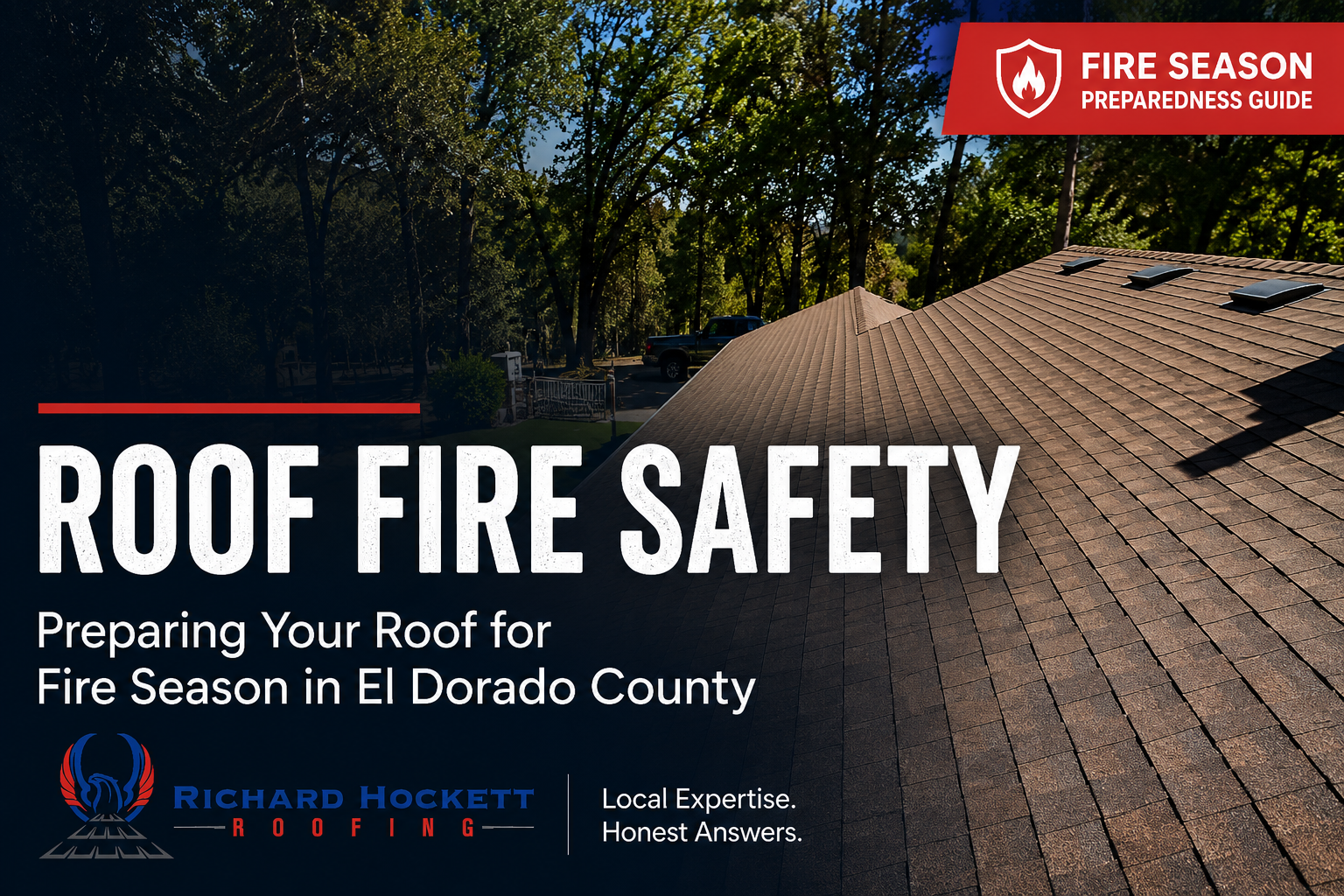
Roof fire safety should be a priority for homeowners throughout El Dorado County. As wildfire season approaches, many residents focus on clearing vegetation and creating defensible space around their property. While those steps are important, the condition of your roof can also play a significant role in protecting your home from wind-driven embers and wildfire-related damage.
Wildfire season is a reality that homeowners throughout El Dorado County prepare for every year. While many people focus on clearing vegetation, creating defensible space, and assembling emergency supplies, one area that’s often overlooked is the roof.
Why Roof Fire Safety Matters in El Dorado County
Communities throughout Diamond Springs, Placerville, Cameron Park, El Dorado Hills, Camino, and Pollock Pines face unique wildfire risks due to the combination of dry summers, vegetation, and seasonal wind events.
Many homeowners assume that homes are only damaged when flames directly reach the structure. In reality, wind-blown embers are often responsible for igniting homes during wildfire events.
These embers can travel significant distances and find their way into vulnerable areas around a home, particularly on and around the roof.
That’s why roof fire safety should be an important part of every homeowner’s wildfire preparedness plan.
How Embers Can Threaten Your Roof
One of the biggest misconceptions about wildfire damage is that flames must reach the home to cause problems.
Flying Embers Can Travel Long Distances
During a wildfire, embers can be carried by wind and deposited on rooftops, in gutters, around vents, and in other areas where combustible debris has accumulated.
If those embers land in dry pine needles, leaves, or other materials, ignition can occur even when the fire itself is miles away.
Common Areas Where Embers Collect
During a roof inspection, some of the most common ember-prone areas we encounter include:
- Roof valleys
- Gutters
- Roof-to-wall intersections
- Behind chimneys
- Around skylights
- Near roof vents
- Areas where debris naturally accumulates
Keeping these areas clean is one of the simplest ways to improve roof fire safety.
Roof Fire Safety Starts With Debris Removal
Throughout El Dorado County, pine needles are one of the most common roofing concerns we see.
Homes surrounded by pine and oak trees naturally collect debris throughout the year. While a small amount may seem harmless, debris buildup can create conditions that increase fire risk.
Pay Special Attention to Roof Valleys
Roof valleys naturally collect debris because of the way water flows across the roof.
Over time, pine needles, leaves, twigs, and organic material can accumulate in these areas.
Regular cleaning helps prevent buildup and reduces potential fuel sources during fire season.
Don’t Forget the Gutters
Gutters are another area that homeowners often overlook.
When gutters become filled with dry leaves and pine needles, they can become a collection point for embers during wildfire events.
Cleaning gutters regularly is one of the easiest ways to improve roof fire safety while also helping your drainage system function properly.
Trim Trees and Maintain Defensible Space
Your roof doesn’t exist in isolation.
The condition of the surrounding property also plays an important role in wildfire preparedness.
Keep Branches Away From the Roof
Overhanging branches can:
- Drop leaves and pine needles onto the roof
- Create pathways for fire
- Increase debris accumulation
- Cause damage during storms
Maintaining proper clearance between trees and your roof can help reduce several risks at once.
Follow Local Fire Safety Recommendations
Many homeowners benefit from reviewing local wildfire preparedness resources.
The Placerville Fire Safe Council provides valuable information and tools that can help property owners improve wildfire readiness and maintain defensible space around their homes.
Roof Fire Safety Inspections Before Fire Season
A roof may appear fine from the ground while still having conditions that deserve attention.
This is one reason regular roof inspections are important, particularly before fire season begins.
Damaged or Missing Shingles
Damaged roofing materials can create openings that allow embers to penetrate vulnerable areas of the roofing system.
During a roof inspection, we look for:
- Missing shingles
- Cracked shingles
- Curling shingles
- Loose materials
- Areas showing excessive wear
Flashing and Roof Penetrations
Areas around chimneys, vents, skylights, and other penetrations should be properly sealed and maintained.
These locations are often overlooked by homeowners but are important components of roof fire safety.
Aging Roofing Materials
Even quality roofing materials eventually wear down.
If your roof is approaching the end of its service life, a roof inspection can help determine whether maintenance or replacement should be considered.
Why Roof Maintenance Supports Roof Fire Safety
Many homeowners think about roof maintenance primarily as a way to prevent leaks.
However, maintenance also plays a significant role in roof fire safety.
Routine maintenance helps identify:
- Debris accumulation
- Damaged materials
- Loose flashing
- Areas susceptible to ember intrusion
- Early signs of dry rot
Addressing small concerns early can help prevent larger problems later.
Dry Rot Can Create Hidden Vulnerabilities
Dry rot is common throughout many foothill communities.
It often develops gradually around:
- Eaves
- Fascia boards
- Roof penetrations
- Areas exposed to moisture
While dry rot itself doesn’t automatically create a fire hazard, it can weaken important components of the roofing system and should be addressed promptly.
Common Roof Fire Safety Concerns We Find in El Dorado County
Every property is different, but there are several issues we commonly document during a roof inspection.
These include:
- Pine needle accumulation
- Clogged gutters
- Aging roofing materials
- Storm-related damage
- Loose flashing
- Debris-filled valleys
- Dry rot around eaves
- Tree-related wear and damage
Many of these conditions are not obvious from the ground and often go unnoticed until a professional roof inspection is performed.
That’s one reason we utilize drone technology and detailed photo documentation throughout our inspection process. Homeowners deserve to see the same conditions we see so they can make informed decisions about their property.
Preparing Before Fire Season Arrives
The best time to improve roof fire safety is before wildfire season is at its peak.
Simple steps such as removing debris, trimming vegetation, maintaining gutters, and scheduling a roof inspection can help reduce risk and identify concerns before they become larger problems.
If you’re unsure whether your roof is prepared for wildfire season, contact us today to see if your roof is ready for fire season.
Taking a proactive approach now can help protect your home and provide greater peace of mind throughout the fire season.
If you’re not sure what condition your roof is in, you can book your roof inspection online today and we’ll give you clear answers.

Recent Comments