
Living in Pollock Pines means your roof deals with more than just the occasional rainstorm. Pollock Pines roof damage is common due to heavy winter snow, strong winds, intense summer sun, and constant pine debris. Over time, these conditions can wear down roofing materials, often without obvious signs at first.
Many homeowners don’t realize there’s an issue until the damage has already progressed. Catching problems early can make a big difference in protecting your home and avoiding more costly repairs.
Why Pollock Pines Roof Damage Looks Different After Storms
Roof damage in the foothills isn’t always obvious. In fact, some of the most serious issues we see start small and go unnoticed after a storm.
What Makes This Area Unique
Homes in Pollock Pines deal with a combination of conditions that accelerate roof wear:
- Heavy snow loads that sit longer on shaded areas
- Freeze-thaw cycles that expand and contract roofing materials
- High UV exposure at elevation, which dries out shingles faster
- Pine needles and debris that trap moisture against the roof
- Wind-driven rain and snow that can push under roofing materials
Because of this, storm damage here often shows up as gradual failure, not just dramatic damage like missing shingles.
Common Causes of Pollock Pines Roof Damages We See
After storms in the Pollock Pines area, certain patterns show up again and again.
Wind Damage
- Shingles lifted just enough to break their seal
- Edges curling or loosening
- Areas where water can now work underneath
Snow and Ice Damage
We often see north-facing sections of roofs in Pollock Pines hold snow longer, which increases the chance of ice dams forming.
- Ice dams forming along roof edges
- Water backing up under shingles
- Stress on older or already weakened sections
Debris Impact
- Branches scraping granules off shingles
- Punctures or soft spots
- Hidden structural weakening
Moisture and Dry Rot
This is one of the biggest issues in this area.
- Moisture trapped under debris or snow
- Slow leaks into decking
- Dry rot forming over time, especially in older homes
Signs of Pollock Pines Roof Damage Homeowners Should Watch For
A lot of homeowners expect obvious signs—but most of the time, the clues are subtle.
Inside the Home
- Water stains on ceilings or walls
- Musty smells in attic spaces
- Insulation that feels damp
- Higher energy bills due to ventilation issues
Outside the Home
- Shingles or debris in the yard
- Dark streaks or uneven roof appearance
- Gutters pulling away or clogged with granules
- Pine needles collecting in valleys
If you’re noticing any of these, it’s worth taking a closer look before things progress.
Why a Professional Inspection Matters (Especially Here)
Climbing on your roof isn’t just unsafe—it usually doesn’t tell you much unless you know exactly what you’re looking for.
In Pollock Pines, many problem areas aren’t visible from the ground or even from standing on the roof.
What a Proper Inspection Should Include
A thorough inspection should give you clear, visual answers, not just opinions:
- Drone inspections to safely view every slope and angle
- Detailed photo documentation of all areas—good and bad
- Identification of early-stage issues like:
- Lifted shingles
- Soft decking
- Early dry rot
- A clear explanation of what’s happening and why
The goal is simple: you should be able to see exactly what we see, so you can make informed decisions about your home.
What to Do After a Storm to Check for Pollock Pines Roof Damage
If a storm just rolled through, a few simple steps can help you stay ahead of bigger problems.
1. Walk Your Property
Look for:
- Fallen branches
- Shingle pieces
- Unusual debris on or around your home
2. Check Inside
Pay attention to:
- Ceilings and corners
- Attic spaces
- Around vents and chimneys
3. Don’t Wait on an Inspection
Even if nothing looks urgent, hidden damage is common here. Catching it early is what keeps repairs simple.
How to Proceed After a Storm Causes Pollock Pines Roof Damage
Not all repairs are approached the same way. In an area like this, it’s important that the work is done thoroughly—not just patched over.
When you’re looking into roof repair, here’s what a professional, organized process should look like.
Step 1: Clear Documentation
You should receive:
- Photos of all affected areas
- A clear breakdown of what’s damaged
- An explanation in plain terms
No guessing, no vague descriptions.
Step 2: A Structured Plan
A “by-the-books” repair process includes:
- Defined scope of work
- Clear timeline
- Transparent communication throughout
This keeps everything predictable and avoids surprises.
Step 3: Addressing the Root Problem
In Pollock Pines, surface repairs aren’t enough if underlying issues exist.
A proper repair may include:
- Replacing compromised decking
- Fixing ventilation issues (important for moisture control and Title 24 compliance)
- Reinforcing areas prone to snow buildup
- Removing debris-related problem spots
Step 4: Final Review and Verification
At the end of the project, you should see:
- Photos of completed work
- Confirmation that all problem areas were addressed
- A roof that’s ready for the next storm
Why Local Experience Matters for Pollock Pines Roof Damage
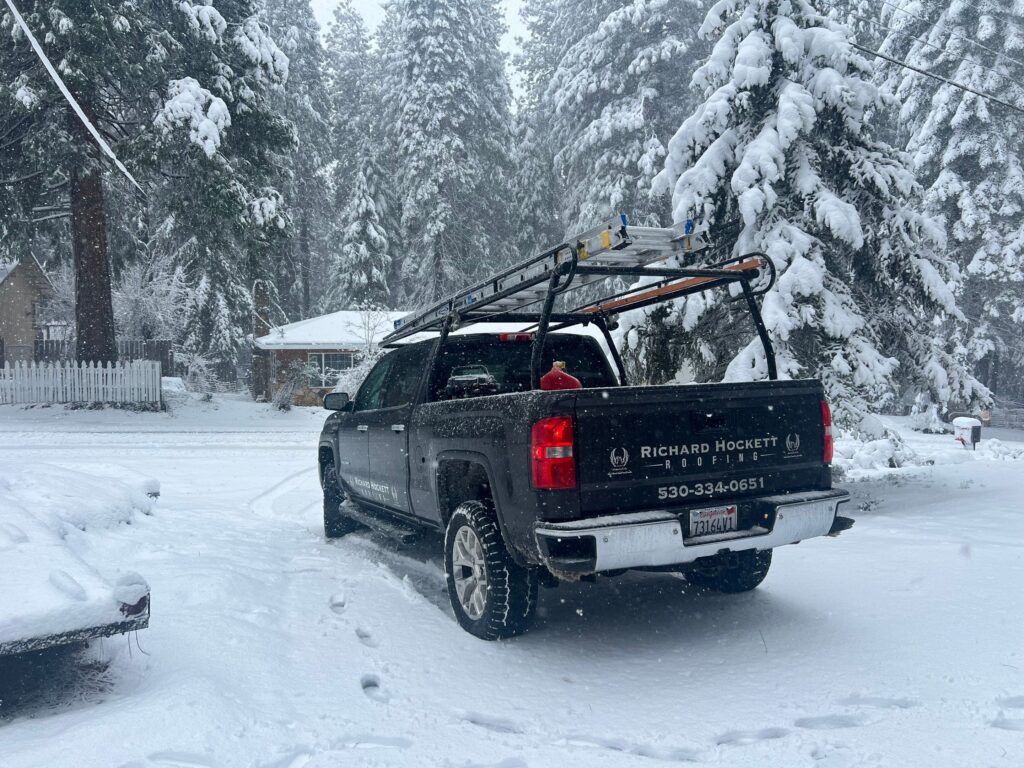
Working in real winter conditions in Pollock Pines—snow, ice, and storm damage are part of what local roofs deal with every year.
Roofing in the foothills isn’t the same as roofing in the valley.
Homes here require an understanding of:
- How snow behaves on different roof slopes
- Where ice dams typically form
- How pine debris impacts drainage and longevity
- Which areas are most vulnerable to dry rot
We’ve seen situations where a roof “looked fine” from the ground—but had multiple hidden issues once properly inspected. If you have questions during the process, you’ll always be able to reach someone directly who understands your project.
That’s why experience in this specific environment makes a difference.
The Cost of Ignoring Pollock Pines Roof Damage
Storm damage rarely stays the same—it almost always gets worse.
Waiting can lead to:
- Leaks spreading into multiple areas
- Mold or mildew growth
- Structural damage to decking and framing
- More extensive and costly repairs later
Catching problems early is what keeps repairs manageable.
Looking for a Storm Damage Roof Repair in Pollock Pines?
Storms are part of life in Pollock Pines, but long-term roof problems don’t have to be. The key is understanding how this environment affects your roof and taking action before small issues turn into major ones.
A clear inspection, thorough documentation, and a structured repair process give you confidence that your home is protected—no guesswork involved.
If you’re not sure what condition your roof is in, you can book your roof inspection online today and we’ll give you clear answers.


Recent Comments